 Ashoka
Changemaking Without Barriers: What 252 Social Entrepreneurs Teach Us About Building a Truly Inclusive World
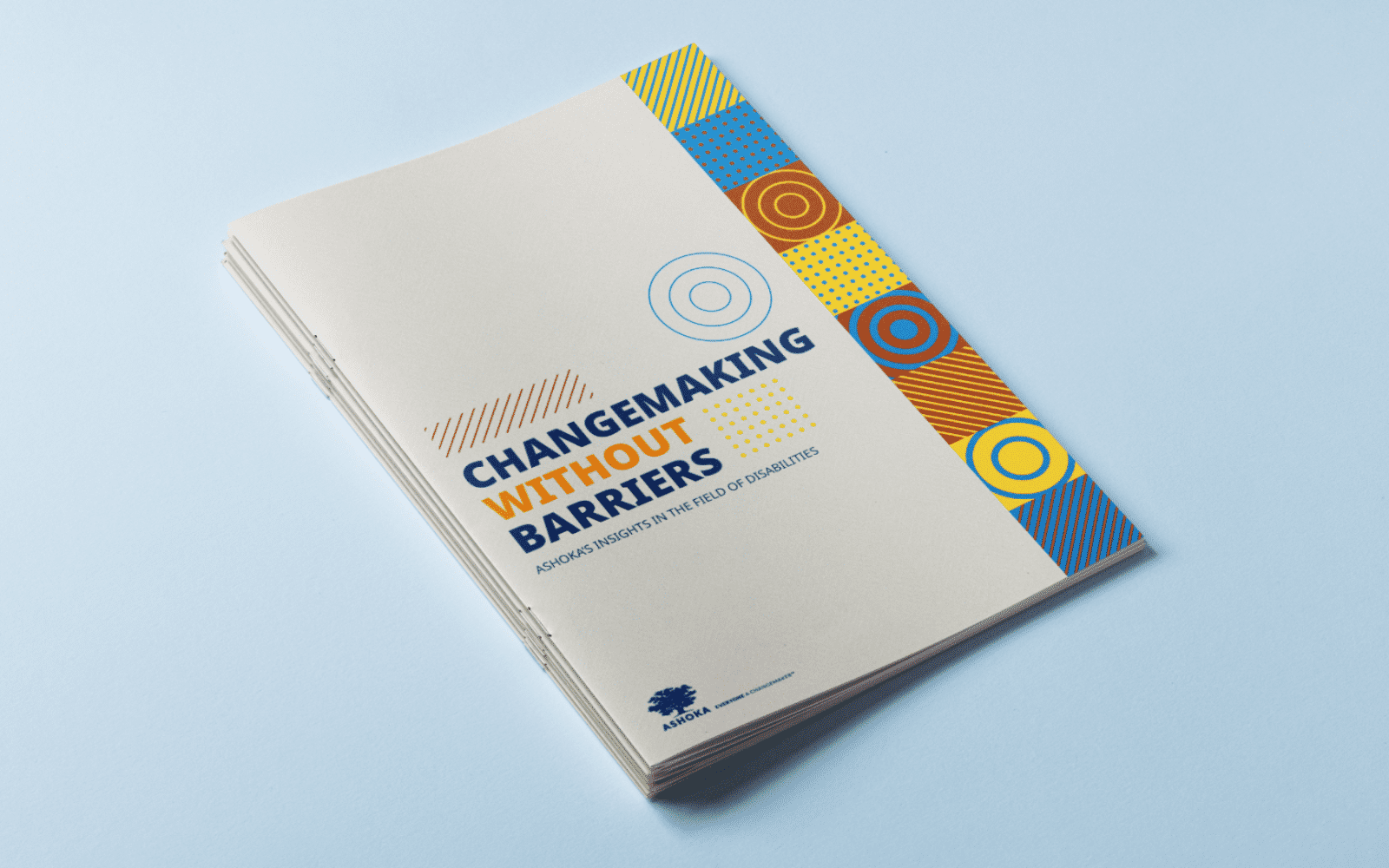
On May 6th, Ashoka’s Canopy Team launched the report Changemaking Without Barriers: Ashoka’s Insights in the Field of Disabilities. This milestone is the result of a long journey between Ashoka and The Seneca Trust, who have been working collaboratively to ensure that the Everyone a Changemaker world we aim to build is, by design, a barrier-free one.
To better understand what it takes to make this vision truly accessible and inclusive - for people with and without disabilities - the Canopy Team analyzed the work of 252 leading social entrepreneurs, our Ashoka Fellows, who have been shaping the field of disability for more than 40 years.
Getting to know these 252 leading social entrepreneurs
Between 1980 and 2025, Ashoka welcomed 252 social entrepreneurs working in the field of disability into its global community, representing 7% of all Ashoka Fellows. With the support of The Seneca Trust, we had the opportunity to closely analyze their work and identify patterns in how they promote accessibility, inclusion, and agency for people with disabilities.
Recognizing that disability is also a social construct, shaped by how societies define and respond to difference, we used the definition from the United Nations Convention on the Rights of Persons with Disabilities to frame our analysis:
Persons with disabilities include those who have long-term physical, mental, intellectual or sensory impairments which, in interaction with various barriers, may hinder their full and effective participation in society on an equal basis with others.
Of these 252 Fellows, 74 identified as persons with disabilities themselves at the time of their election. That qualifier matters: our analysis was based on Ashoka profiles, documents produced by our search and selection teams when interviewing and studying candidates. These profiles reflect who each person was at the moment they joined our community.
Geographically, 80 Fellows are based in Asia, 68 in Europe, 42 in South America, 34 in North America, and 28 in Africa. The five countries with the highest representation are India (33 Fellows), Brazil (22), the United States (19), and Hungary and Indonesia, tied with 11 each.
To conduct this analysis, we combined human expertise with artificial intelligence. Ashoka’s AI Lab developed a network map that identified clusters and patterns across thousands of data points extracted from Fellows’ profiles. The Canopy Team then reviewed, refined, and deepened this analysis, ensuring both accuracy and nuance while also identifying additional insights.
What their work reveals about a fully inclusive world
From this analysis, we identified eight common patterns in how these Fellows are driving change, offering strong signals of what a fully accessible and inclusive Everyone a Changemaker world could look like.
The first pattern is what we call “Changemaking creates more changemaking.” These Fellows don't just change systems, they create the tools, spaces, technologies, experiences, and methodologies that promote agency, self-determination, and shared responsibility, helping others - especially people with disabilities - to recognize themselves as changemakers and act as such. This creates a multiplier effect, reaching far beyond what any individual effort could achieve.
This shows up in different ways:
- 70% invest in capacity building and training,
- 53% engage in policy advocacy,
- 50% develop new curricula and knowledge models,
- and 50% scale their impact through media and awareness campaigns.
A second key pattern is multi-sector collaboration. 100% of our Ashoka Fellows work with at least two sectors. They approach disability not as an isolated issue, but as a convergence of human rights, education, health, and culture. Their most frequent collaborators are civil society (74%), families (57%), government (57%), as well as educational (54%) and health (42%) institutions.
A third pattern is the use of an intersectional lens. These social entrepreneurs recognize that multiple systems of marginalization can overlap and reinforce each other, creating unique and compounded barriers. They deliberately work to identify and address the overlooked needs of people who hold more than one marginalized identity, designing solutions that address these compounded barriers.
The fourth pattern centers on the principle “Nothing about us without us.” Fellows apply this foundational disability rights principle by involving persons with disabilities from the very beginning of the design process, co-creating solutions with them, not just for them. This ensures solutions address real needs and avoids costly assumptions or after-the-fact adaptations.
The fifth pattern is the usage of Universal Design. Rather than building for the "average" person and retrofitting later, Fellows use universal design principles to reimagine systems, environments, and services that are accessible and inclusive from the outset, benefiting everyone, regardless of ability.
Our sixth pattern is about how they create products and spaces that work for everyone. This commitment to universal design translates into a wide variety of practical outputs: educational tools, accessible housing, and public spaces designed for people with a wide range of abilities.
The seventh pattern is a shift from segregation to inclusion. Fellows challenge traditional models of institutionalization and segregation by championing inclusive education, employment, and community living, designing systems that accommodate everyone from the start, not as an afterthought.
Finally, the eighth pattern is the promotion of autonomy and agency. Fellows design solutions that give people greater control over their own lives, reducing dependency, expanding genuine participation, and centering dignity and self-determination.
Gaps to Close and Opportunities to Seize
The work of these 252 Fellows shows us what is possible. But we also know how much collective effort remains. As we began this study, we encountered a stark reality that we want to name directly: in a world where 1.3 billion people live with disabilities, only 2% of philanthropic giving in the U.S. goes to disability-related causes, with a mere 0.1% directed at disability rights and social justice. And while 80% of people with disabilities live in developing countries, only a fraction of that already limited funding reaches those communities. The gap between need and investment is vast. So is the potential for impact.
Through this analysis, we also identified five other key gaps, both as guides for our own Fellowship expansion and as an open invitation to funders, partners, and changemakers everywhere.
Gap 1: Representation in the Fellowship. While 252 Fellows working in the field of disabilities represents 7% of our global Fellowship, the World Health Organization estimates that 16% of the world's population lives with a disability. Closing this gap is a direction we're actively working toward. It's worth noting, however, that the 74 Fellows who identified as persons with disabilities likely underrepresents the true number in our network, as some may not have mentioned their disability in their profiles, some acquired a disability after their election, and some Fellows with disabilities may be working in other fields.
Gap 2: Self-Advocates as Social Entrepreneurs. Related to the above, there is a broader gap in how self-advocates with disabilities are recognized and supported as social entrepreneurs, not just in Ashoka's Fellowship, but across the social innovation field as a whole.
Gap 3: Geographic Representation. Our Fellows come from 58 countries, but our study revealed clear gaps: no Fellows in this field from Australasia, and underrepresentation in East Asia, Central Asia, Eastern Europe, the Middle East (outside Egypt and Jordan), and Francophone Africa. Closing these gaps requires new country presence, funder support, and active nominators in those regions.
Gap 4: Intersectional Identities. Some marginalized identities that intersect with disability are underrepresented in our community, particularly innovators working at the intersection of disability and conflict survivorship, single parenthood, indigenous identity, and body size (each under 3% of the Fellows analyzed).
Gap 5: Emerging Crises. Few Fellows in the disability field are working at the intersection with migration, humanitarian action, or climate change, three overlapping crises affecting every corner of the world. We see a real opportunity here to collaborate with other Ashoka initiatives like Next Now: People & Planet and Hello World to find new Fellows at these intersections.
Recommendations and Opportunities for the Field
Beyond the insights above, we mapped concrete opportunities to strengthen the disability field and amplify the impact of the social innovators already working within it.
Opportunity 1: Fund with a systems change lens. We encourage funders and partners to move toward long-term, unrestricted funding that allows social entrepreneurs the flexibility to pivot, adapt, respond to complex and evolving challenges, and keep their focus on lasting structural change, without being driven by short-term deliverables. Beyond financial support, funders can add significant value by taking time to understand the big-picture visions of these innovators and addressing specific needs that grants don't typically cover.
Other important recommendations include:
- Enable grassroots innovation. Create funding pools that allow established social entrepreneurs, the "changemaker makers", to support the grassroots innovators emerging from their own programs.
- Support multi-sector collaboration. Allow and encourage social innovators to develop relationships across sectors, fields, and practices. Our Fellows' work shows this is one of the most reliable paths to lasting, systemic change.
- Provide hands-on support. Pro-bono and volunteer engagements can offer social entrepreneurs critical knowledge and skills in areas where they have gaps.
- Build accessibility into budgets from day one. When funding social innovators, include accessibility costs in the budget from the start, so the work is inclusive by design, not by exception.
Opportunity 2: Policy and legislative action. Decision-makers should work hand in hand to create enabling environments for disability-focused organizations, through tax incentives, government funding with a systemic lens, streamlined legal recognition processes, inclusive lending mandates from financial institutions, meaningful inclusion of persons with disabilities in policymaking, and scaled adoption of Fellows' proven models in schools and public institutions.
Opportunity 3: Feature Social Innovators and their Systemic Work for Framework Change. Media organizations, influencers, and public figures have a role to play. Featuring the stories and systemic changes of social entrepreneurs in the disability field can mainstream recognition of the rights and agency of persons with disabilities, fighting stigmatization and helping build a new cultural reality.
Opportunity 4: Provide and support opportunities for early volunteerism and exposure to social issues. Another powerful insight is that early exposure matters: 27% (67 out of 252) report that early exposure to a person with a disability outside their family — or a volunteering experience — was the pivotal catalyst for their commitment to this field. When we include Fellows who report having at least one family member with a disability, that number rises to 38%. This tells us something important about the power of proximity, and the opportunity for schools, foundations, companies, and governments to invest in structured and early changemaking experiences for young people.
Opportunity 5: Promote collaboration among Fellows. The knowledge, stories, and practical wisdom held within our Fellowship is extraordinary. Collective efforts - joint white papers, global advocacy campaigns, peer learning sessions, multi-sector consortiums - could make tackling the most complex challenges in the disability field faster, deeper, and more effective.
Join us in building a barrier-free Everyone a Changemaker World!
The 252 Ashoka Fellows mapped in this study generate daily proof that a world where everyone has access to the resources, knowledge, and experiences needed to recognize their own agency is not just a dream; it is already being built. But for these examples to become a new reality, we need allies who are willing to show up for each other and for this movement.
We invite you to read the full report, explore the stories and insights behind each pattern, gap, and opportunity, and to join us in building a barrier-free Everyone a Changemaker world.