 Ashoka
When Business Meets Purpose: Social intrapreneurship in the corporate world
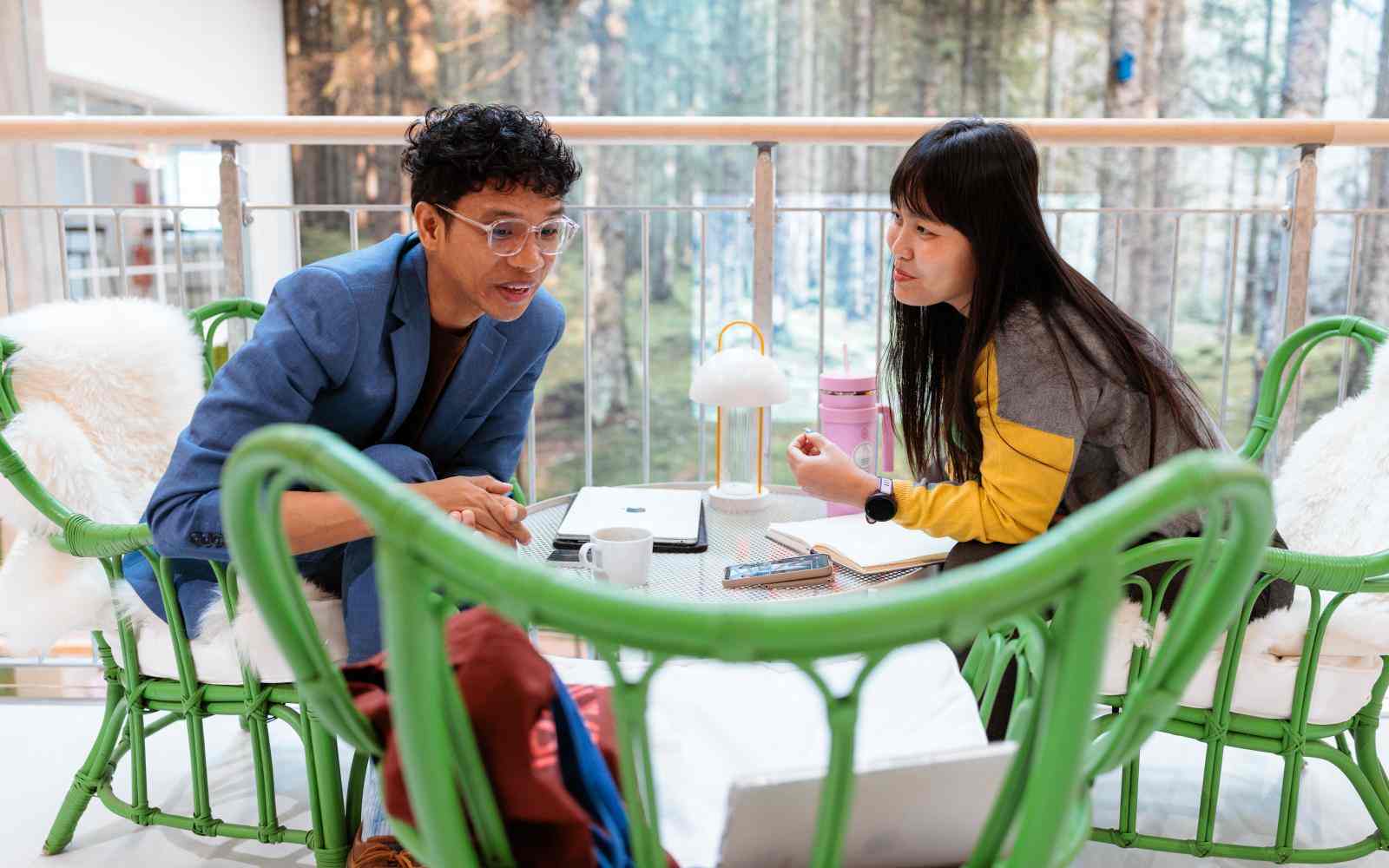
What’s the role you can play in driving change, and how can making change accessible have the power to reshape entire systems? These are the questions that IKEA employees Hugo Asplund and Linh Tran Dieu both found themselves pondering when learning more about social entrepreneurship and changemaking through Ashoka’s six-week online course, the Future of Business. Read on to discover the learning journeys they embarked on and what they learned about intrapreneurship, leadership, and corporations’ roles in making the world a better place. Hugo Asplund has spent 22 years at IKEA working in various commercial roles across different markets. As the Group Sustainability and Food Transformation Manager for IKEA in Indonesia, Hong Kong, Macau and Taiwan, he is used to working in big organizations, following clear processes, and collaborating with many co-workers. And yet, something shifted when he started working side-by-side with social entrepreneurs. “Part of my journey was that I felt more and more that my contribution to IKEA would not only be to sell more things, but also to help IKEA transform into what I believe it could become: a leader in how retail could look,” says Hugo. That feeling, that there was more to give, more to change, more to become, came about through his experience in the Future of Business course. This learning journey is offered to Ashoka’s corporate partners and network members, focused on the fundamentals of social impact and the skills to drive social innovation within companies. In other words, what we call social intrapreneurship. In Linh’s journey, a different question came up. She was looking for something deeper than a business framework: “I was trying to figure out what kind of leader I wanted to be: the kind of leader I look up to, and the person I want to become.” “I also try to reflect that in our way of working”, Linh explains. “In business development, sometimes the focus is on costs and figures. But I also try to think from another angle: if I make that decision, how will it impact our supply partner? How will it impact our team?” Both Hugo and Linh participated in IKEA Social Entrepreneurship accelerator programmes, Hugo through the Instellar & IKEA Social Entrepreneurship Accelerator (I‑SEA) programme in Indonesia, and Linh through the Dela Ashoka & IKEA Social Entrepreneurship programme. Through these experiences, they had the opportunity to collaborate closely with social entrepreneurs. And it was in these collaborations that a shared realization began to take shape. For Hugo, the eye-opener was humbleness: “At IKEA, we are very process-oriented. Things take time. Social entrepreneurs solve problems on a daily basis, on a shoestring, with very limited resources. For me, that was really an eye-opener. You can do a lot with very little. That’s how IKEA started. And by collaborating with social entrepreneurs, we have living examples of it”. The lesson he took back wasn’t a strategy. It was a mindset shift: being resourceful instead of complaining about not having resources. For Linh, the revelation unfolded by working alongside Ashoka Fellow Ryan Gersava, the founder of Virtualahan. Ryan’s organization breaks down employment barriers in the Philippines through alternative education and employment models and addresses the systemic root causes that contribute to unemployment. “It’s not specific to one employer or one government unit,” Linh realized. “If the whole country has a tool they can access, then they can change their mindset themselves. They can get the result by themselves.” That’s systems change: not trying to fix one node at a time, but redesigning the infrastructure that connects all of them. And it can apply to business environments, teams and leadership, which was related to Lihn’s initial query. One of Hugo’s clearest takeaways from combining Ashoka’s Future of Business programme with the I-SEA programme in Indonesia was the importance of numbers. “There are so many fantastic social entrepreneurs doing fantastic things. But when the bigger structures are working against them, when the system isn’t supporting them, it’s an uphill battle. To really start making change, you don’t just need good examples. You need the numbers to start adding up.” For Hugo, this means both growing the number of people actively supporting social entrepreneurs, and increasing the number of business leaders understanding the importance of sustainability in the business sector. And that’s where a company like IKEA can play a different kind of role. Based on his experience in the Future of Business programme, Hugo designed the Changemaker Program: a clear pathway for co-workers to grow and drive change inside and outside IKEA. “We need to use our volume to start changing this reality.” In practice, that meant rethinking the scale of co-worker engagement in Indonesia and Taiwan. The previous model with co-workers acting as mentors and thought partners created deep connections between social entrepreneurs and co-workers but had a somewhat limited reach. Hugo aims to increase the number of opportunities for co-workers to develop their changemaking skills through supporting entrepreneurs. “This is one of my main takeaways: we need to look into the big scale to best support social enterprises, but also drive change within our own organizations.” As he concludes, he shares the question: “And you, what’s the role you can play?” This piece is part of a miniseries documenting co-workers and social entrepreneurs exchanging knowledge and inspiring each other to contribute towards greater impact and systems change. Read this other inspiring example, and watch here on our Medium publication for more articles as they are published! The Dela programme has recently completed its fifth edition and has brought together over 560 participants from across organizations and sectors. Since the first accelerator, 65% of the participating social entrepreneurs have changed their strategies to grow their impact beyond their organizations and all of them felt more confident in pursuing systems change. As per the participating co-workers, all of them gained valuable insights, became more aware of their agency, and activated others for social impact. Learn more about the programme and meet the previous cohorts here.Taking the plunge
Linh Tran Dieu, business developer at IKEA based in Ho Chi Minh City, Vietnam, also joined the course while taking part in Ashoka’s and IKEA Social Entrepreneurship year-long systems change accelerator, Dela. In this programme, IKEA co-workers support social entrepreneurs in their strategies to achieve deep social change.Two social intrapreneurs, one realization

Broader engagement, wider scaling