 Ashoka
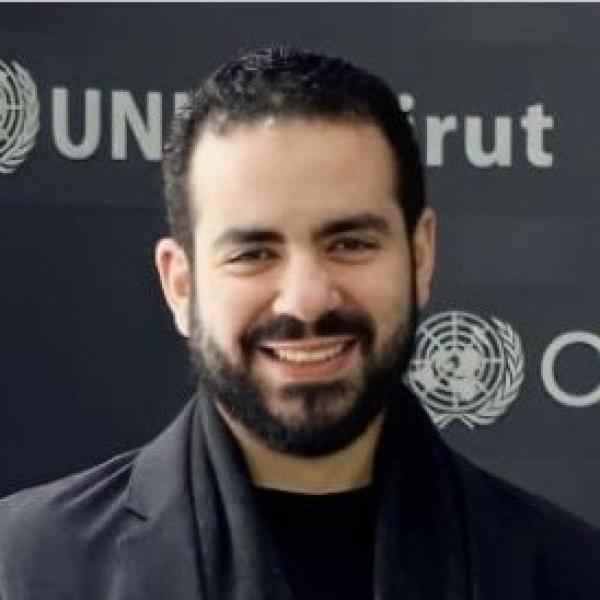
Mohannad Hesham
Introduction
Beginning in Upper Egypt, Mohannad is creating networks of communities equipped with the capabilities to identify investment opportunities and evaluate the feasibility of operating state-of-the-art water treatment facilities. His methodology is now accepted as common practice by the government-owned Water Holding Company in Egypt. To achieve this, Mohannad has developed a standardized methodology adopted by 28 water organizations involved in the identification, design, construction, maintenance, and successful financing of their water treatment plants. The success of Mohannad’s methodology has led to its replication in projects across Kenya, Uganda, and Tanzania.
The New Idea
Mohannad's organization, Life from Water, aims to address the critical issue of inadequate water networks in local communities. To achieve this, they are creating a network of skilled water organizations equipped with the latest technology for water purification, monitoring, and evaluation. By focusing on rural areas, Life from Water provides essential water services to underserved populations. The foundation for this approach lies in building diversified and self-sufficient communities.
These local water organizations that joined Mohannad's initiative form a collaborative network that fosters knowledge sharing and cooperation. They communicate regularly, exchange information, and learn from each other's experiences to identify best practices and improve their operational efficiency. While a formal platform may not be in place, these organizations utilize various communication channels, such as meetings, phone calls, and online platforms, to facilitate collaboration and knowledge sharing. By working together, they can reduce costs, improve response times, and ensure the sustainability of their water infrastructure.
Mohannad's vision for Life from Water extends beyond providing basic water access. He aims to leverage these water solutions to support agricultural development and create economically dynamic communities. By ensuring a reliable water supply, Life from Water does not only meet immediate human consumption needs but also lays the foundation for sustainable rural economies. The goal is to develop a scalable solution that can be applied to various contexts, driving positive social impact. Life from Water's approach can also be applied to farmers, transforming their communities. By creating diversified and self-sufficient water-resilient communities, these solutions can not only address immediate consumption needs but also serve as a foundation for agricultural growth. These water organizations, coming together under Mohannad's leadership, bring essential capabilities to support agriculture and mitigate the effects of climate change. In essence, Life from Water has the potential to contribute to an economic renaissance in rural areas.
The Problem
Arab regions, such as Egypt, have historically faced a lack of investment in their national water networks. The majority of water and agricultural investments have been concentrated in areas near metropolitan centers. This problem is not unique to Egypt. In Kenya, particularly in the northwest, climate change is exacerbating the issue, leading to nomadic patterns and complicating border management. These regions have been chronically under-invested in terms of water infrastructure and resources.
This under-investment leads to a dire situation. The World Health Organization’s 2016 report underscores the human cost, attributing 408,337 deaths and disabilities to unsafe water and poor water resource management. This is particularly acute in rural areas, where nearly 29% of the population faces acute water scarcity due to infrastructure deficiencies
To date, the efforts of Life from Water have resulted in 78 water station projects that have been achieved and the model has been replicated in areas in Kenya, Uganda, and Tanzania. These projects serve as evidence of the organization's vision and the effectiveness of its replicable solutions. The projects have successfully met the requirements of their partners, and an independent research study has validated the assessment methodology used. Over the past ten years, Life from Water has worked with a network of research partners to develop a solution-based assessment methodology. This methodology has gathered agreement from 28 major water organizations, ensuring a unified approach to project evaluation. Moreover, Life from Water has spearheaded the creation of a network of WATER ALLIANCE, uniting these organizations in their commitment to share expertise and advocate for their individual projects with national water authorities.
The solution proposed by Mohannad is to systematically build communities that can address their immediate water consumption needs throughout the year. By creating networks of communities equipped with the necessary technology and expertise, the WATER ALLIANCE empowers them to manage their own water consumption and expand their agricultural or forestry activities based on available water resources. These networks of water communities will be independent entities capable of collaborating with other community partners. By implementing a cluster strategy focused on water sufficiency, the ALLIANCE aims to stabilize the region and provide a tangible goal to strive for. The research component of this initiative will serve as evidence to support the effectiveness of the proposed solutions.
The Strategy
Life from Water's methodology has garnered widespread recognition and acceptance from various ministries in Egypt as an effective approach to addressing water challenges. These ministries include the Ministry of Social Solidarity, the Ministry of Housing, Utilities, and Urban Communities, and government-owned water holding companies. Mohannad has played a crucial role in uniting all stakeholders and ensuring adherence to a common plan. Mohannad's successful advocacy has led to his methodology becoming the default choice for all ALLIANCE members. This is a significant achievement, as it ensures that projects meet drinking water standards while also providing a foundation for improving agricultural practices. For the first time, all the necessary elements and tools are in place to ensure that projects meet drinking water standards and support agricultural development.
Mohannad uses a multi-step methodology to ensure the effectiveness of this water solution; identification, assessment and design, implementation, and assurance. Identify: Utilizing GIS technology, the organization conducts thorough assessments to identify areas with existing water stations. By collaborating with the National Water Holding Company, Life from Water avoids duplicating efforts and focuses on regions where water infrastructure is most needed. Asses and design: If a targeted area lacks government plans for a new water station, Life from Water and its ALLIANCE initiate a comprehensive needs assessment to validate the necessity of such a facility. If the area has an existing water supply but it is not clean, LFW runs the necessary tests for the water to be able to design proper purification solutions. Implement: To demonstrate community commitment, the organization encourages local fundraising efforts. Once a water station is deemed essential, Life from Water works collaboratively with the community to implement the project. Ensure: The organization provides training to community members on the operation and maintenance of the station, ensuring its long-term sustainability. In Egypt, Mohannad has urged actors to change their perspective and is demonstrating to ALLIANCE members how to make the methodology operational step-by-step. In Kenya, the change is being experienced all at once, as Indigenous communities forced to leave their once-settled communities are working with Life from Water to dig the water foundation for the community's future agricultural renewal, which was deemed not doable until Life from Water's intervention.
Furthermore, Life from Water has implemented a robust Monitoring and Evaluation (M&E) system to ensure the effectiveness and sustainability of its projects. The organization utilizes a clear framework of indicators to assess project performance at various levels, enabling it to track progress, identify challenges, and measure outcomes. Through data analysis, Life from Water can identify patterns, evaluate overall effectiveness, and make necessary adjustments. Additionally, the integration of smart flow meters enhances data collection, providing valuable insights into water usage and distribution. Recognizing the complexity of water-related challenges, Life from Water fosters collaboration with a wide range of stakeholders. Life from Water has established a two-year partnership with the Sawiris Foundation Egypt to measure the impact of 28 Water for Life stations. In collaboration with the Abdul Latif Jameel Poverty Action Lab and Brown University in the United States, this partnership aims to conduct a comprehensive evaluation of Life from Water's methodology. By comparing its approach to other implemented strategies, the research will provide valuable insights into the effectiveness and scalability of Life from Water's solutions.
In addition, a key component of Life from Water's strategy is empowering communities to take ownership and control of their water systems. AI technology, particularly Chat-bots, plays a pivotal role in achieving this goal. These AI-powered virtual assistants offer a range of functionalities, including information on water quality, consumption patterns, maintenance procedures, and troubleshooting tips. By providing communities with access to AI-powered tools, Life from Water can replicate its successful model in other regions. One of the significant advantages of AI Chat-bots is their adaptability to different contexts and languages. Life from Water has demonstrated this flexibility in its work in North Kenya, where the local population primarily speaks a language less commonly known. Recognizing that a portion of the community also speaks Somali, and to ensure that the AI system could benefit these communities, Mohannad modified the Chat-bots to communicate in Somali. This adaptation facilitated effective communication and increased the Chat-bot’s usability among the local population.
To date, Mohannad’s work has approximately helped 100,000 individuals and has implemented a total of 216 projects across 261 villages in Egypt, Kenya, Uganda and Zanzibar.
The Person
Mohannad, born in Cairo in 1992, exhibited a strong sense of social responsibility and academic curiosity from a young age, and he found solace and inspiration in reading. His early years were marked by a fascination with science, creative pursuits, and a growing desire for knowledge. During his high school years, Mohannad experienced a significant turning point. Leading by example, he guided his school to victory in the Think Quest competition, an international competition that challenged students to enhance their project management, research, teamwork, and technology skills. Mohannad’ s team successfully conducted a hybrid research project, combining fieldwork and online research under the supervision of a teacher. His great empathy for people in need was cultivated by his participation in community service projects, such as food distribution and orphan care volunteer work.
A turning point in Mohannad's life was when he took part in the Khawatir program, it was a reality TV program that immersed participants in the lives of underprivileged communities. Mohannad was assigned to a rural village in Fayoum, where he experienced firsthand the daily struggles faced by its residents. Living and working alongside the villagers, he encountered numerous challenges. The villagers faced a multitude of challenges, including limited access to clean water, inadequate sanitation facilities, a lack of basic infrastructure, and widespread poverty. These factors significantly impacted their quality of life and hindered their ability to meet their basic needs. Through his immersion in this community, Mohannad gained a deep empathy and understanding of the hardships faced by rural people. Witnessing the daily struggles of the villagers, he became acutely aware of the critical need for improved access to essential resources like water. This experience ignited a passion within him to address these societal injustices and create a more equitable and sustainable future for marginalized communities.
Inspired by his experience with the Khawatir program, he launched the Life from Water initiative in 2011. Driven by this newfound purpose, Mohannad shifted his academic emphasis from engineering to strategic management in an effort to acquire the knowledge and abilities required to achieve his objective. 'Life from Water' was officially recognized as an institution by Egypt's Ministry of Social Solidarity in 2014.