 Ashoka
Introduction
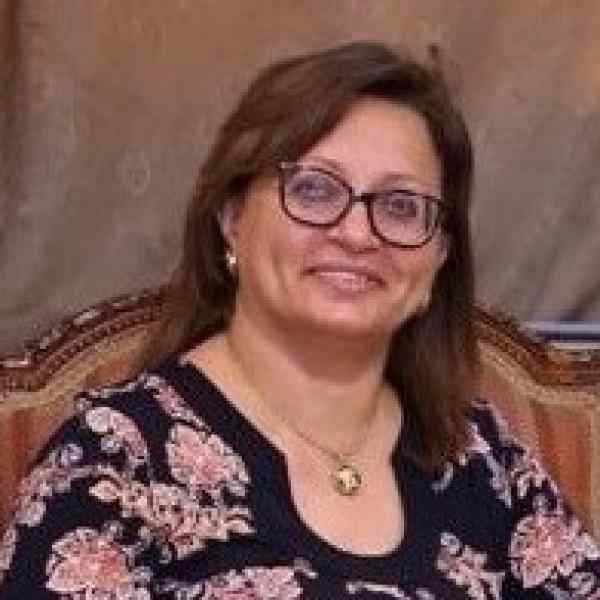
Lamia is introducing a new dignity-based inclusive health system in Egypt. She is achieving this by building a network of transformed doctors and clinics, and simultaneously empowering communities through health education on critical health issues.
The New Idea
Lamia is introducing a new model of healthcare in Egypt, one that reclaims dignity as a core principle in how care is delivered, received, and understood. Her vision stems from a deep personal understanding of how the current system alienates those it is meant to serve. Growing up, she witnessed how people around her were excluded from care, not because of a lack of infrastructure, but because the system was unaffordable, confusing, and indifferent. Lamia realized that solving this crisis requires more than building hospitals or increasing budgets—it demands a new approach that prioritizes human-centered solutions to make healthcare truly accessible, inclusive, and welcoming.
Lamia is building a network of doctors who share a commitment to dignity, ethical, and respectful care. What began in 2008 with just 22 dedicated physicians has grown to include more than 3,000 doctors today and continues to expand. These medical professionals provide free, compassionate care to underserved populations, forming the foundation of a transformative grassroots movement. Lamia also maps top-tier doctors, identifying those who could act as role models and advisors in her system. These are not only highly skilled professionals but individuals willing to mentor and inspire a new generation of ethical, community-oriented healthcare providers.
Lamia introduces medical convoys and health camps to connect with communities often left behind, and establishes clinics where care is offered through her network of volunteer doctors, ensuring that no one is excluded due to financial hardship. Moreover, Lamia is reshaping the future of medicine. She is cultivating a new generation of doctors through an academy that introduces young professionals to a different kind of medical practice, one grounded in empathy, ethics, and respect. She extends this approach to nurses, recognizing their central role in patient care, and ensures they receive specialized training, ensuring that the values she champions are embedded at every level of care.
Ultimately, Lamia is redefining how Egypt thinks about healthcare. By putting people before buildings, values before bureaucracy, and education before expansion, she is laying the groundwork for a system that is ethical, accessible, and truly transformative.
The Problem
In Egypt, most vulnerable communities’ access to healthcare remains a daily struggle, not just due to poverty, but because of a system that has long failed to meet people where they are. Many individuals are unsure where to seek help, how to navigate the system, or when to seek care. The problem is not just the absence of services, but a deeper disconnection between people and the institutions meant to serve them. But this crisis is not unique to Egypt. Similar tragedies are unfolding across the Global South—in Uganda, for example, women in rural villages face the same barriers: no practical access to doctors, crippling distrust of the healthcare system, and a dangerous lack of health education. Despite decades of aid and development initiatives, millions remain trapped in a cycle of illness and preventable death with no clear way out.
In Egypt, the statistics expose a national health disaster. While over 95% of Egyptians live within five kilometers of a health facility, this proximity is meaningless when the care people receive is unaffordable, inadequate, or humiliating. Utilization of services remains critically low, especially in rural and underserved areas. In Upper Egypt, nearly 30% of women do not see a doctor at all—not because clinics are unavailable, but because they lack knowledge of where to go, distrust the available services, or can’t afford quality treatment. The lack of dignity in healthcare delivery compounds the crisis. For many Egyptians, especially the poor, healthcare interactions are transactional and dehumanizing. Patients are often treated as cases to be processed, not as people deserving of respect and compassion. This erodes trust and drives even more people away from seeking care until it’s too late.
The crisis is also rooted in how doctors are trained and prepared. Despite Egypt’s abundance of medical universities, many graduates lack practical clinical skills, ethical training, and a human-centered approach to patient care. There is no standardized system to teach doctors how to interact with patients with empathy and respect, nor are there programs that equip them to address real-world health challenges outside hospital walls. Medical education remains largely theoretical, leaving new doctors ill-equipped to serve underserved populations with dignity.
At the same time, Egypt suffers from a critical shortage of skilled medical professionals in the public health sector. With only 0.7 physicians per 1,000 people, the country falls significantly below the average for the Middle East and North Africa. There are only 9.2 hospital beds per 10,000 people, resulting in desperate overcrowding and unmet needs. When public healthcare fails—as it often does—patients are forced into the unregulated private sector, where prices are usually exorbitant, and quality is inconsistent. Many families face an impossible choice: forgo care, or risk financial ruin. Healthcare services in Egypt are also profoundly fragmented. Public facilities, private clinics, NGOs, and community organizations often operate in silos, failing to coordinate their efforts or develop integrated solutions. As a result, people fall through the cracks even when services exist.
Adding to this is a severe lack of community health education and prevention programs. People are left in the dark about their basic health rights, how to prevent disease, or when and how to seek care. This perpetuates cycles of late diagnosis, worsening illnesses, and avoidable suffering. Even when affordable clinics exist, they rarely consider patients’ financial realities or offer dignified, case-by-case fee structures. The system is rigid, transactional, and blind to the lived experiences of low-income patients. Nurses—the frontline of patient care—are often excluded from ethical training, leaving a gap in compassionate, ongoing patient support. Without the tools to approach care holistically, nurses, too, are caught in a system that prioritizes efficiency over empathy.
The Strategy
Lamia’s journey began from a place of profound anger and deep empathy, being deeply moved by the tragic lack of access to quality healthcare and the alarming absence of health awareness prevalent in Egyptian communities. Witnessing this widespread suffering, Lamia became convinced that radical change was not just desirable, but essential. She started to explore ways to confront this dire situation head-on, even venturing into a garbage-collecting community to understand the brutal realities of health deprivation at its most extreme.
Her first realization was simple but radical: if you want to rebuild trust in healthcare, you must start with the human beings delivering it. Lamia knew that creating more hospitals or writing new policies would not solve the problem if doctors continued treating patients as numbers on a chart. Hence, Lamia started not with infrastructure, but with people. In 2008 she personally brought together 22 doctors who believed, like she did, that healthcare should be grounded in dignity and respect. This was the beginning of a movement, not just to provide medical services, but to redefine what it means to be a doctor in Egypt. Since then, her network has expanded organically and through intentional outreach. Some doctors hear about her work through word of mouth, referrals from within the medical community that she is part of, or exposure to her model through conferences and training. Others are approached directly by Lamia or her team, especially when they are identified as high-integrity practitioners through local network or patient feedback.
Once doctors express interest, they are invited to attend values-based onboarding workshops that emphasize ethical care, active listening, and patient dignity. Many also go through hands-on training through the Egypt Without Disease Academy, where they learn both clinical competencies and human-centered care skills. This approach ensures consistency and alignment across the growing network. By 2025, this network had engaged 3,056 doctors across 12 Egyptian governorates, many of whom, after joining, went on to refer colleagues from their hospitals and networks that they believed followed the same dignity-based approach, organically expanding the network’s reach. These doctors provide treatment through clinics, mobile medical convoys, and direct community outreach, ensuring that even the most marginalized populations receive care without humiliation or neglect. The impact of their work is tracked through multiple channels: patient satisfaction surveys, follow-up visits, and regular debriefs with local community health ambassadors, trusted individuals embedded in the communities advocating for equitable care, raising awareness and helping bridge the gap between patients and the healthcare system. Clinics staffed by doctors trained in Lamia’s model report significantly higher patient retention, with over 90% of patients returning for follow-up visits or referring other family members to Lamia’s clinics.
Parallel to this, Lamia recognized that the community needed more than medical treatment—they needed knowledge and empowerment. To address this, in 2013 she began organizing health education campaigns in underserved communities at Youth Centers as part of their partnership with the Ministry of Youth and Sport, tailoring each initiative to specific community health needs. For example, her “Sugar Crush” campaign targeted diabetes prevention, equipping individuals with practical tools to manage and avoid chronic illness. These campaigns are ongoing and have evolved into a sustained community health education program. Since 2013, they have reached over 180,000 individuals across nine governorates, with measurable improvements in health literacy, early diagnosis rates, and community-led health initiatives. Impact is tracked through community feedback loops and collaboration with local health units to monitor changes in health-seeking behavior. Notably, several community members have reported that, as a direct result of these campaigns, they were able to recognize early symptoms of illness—either in themselves or in family members—and take timely action. In many cases, the campaigns not only facilitated early diagnosis but also provided practical guidance on how to manage these conditions, reinforcing the program’s role in empowering individuals to take charge of their health.
Lamia’s commitment to community-based solutions led to the establishment of two pioneering training programs: a specialized nurses’ training initiative launched in 2020 and the Egypt Without Disease Academy for junior doctors, founded in 2022. By 2025, 1,438 nurses and1,616 junior doctors have graduated from these programs, equipped with practical skills and dignity-based approach to care. There professionals are now employed across public and private hospitals and clinics, Lamia’s own clinics, and other healthcare institutions, where they independently apply what they have learned, often becoming informal educators within their teams and mentoring colleagues in respectful, patient centered care. While nurses and doctors are not necessarily paired together, both groups serve as catalyst for change within their respective environments. Importantly, the connection between them does not end at graduation. Alumni along with the network, remain actively engaged through a dynamic professional network that fosters ongoing peer learning, collaboration, and mutual support. This community serves as a platform, known as “Heal Ambassadors” for sharing best practices, troubleshooting challenges, and co-developing new approaches to ethical care. Regular meetups, digital forums, and joint learning sessions ensure that the values instilled during training continue to evolve and adapt in real-world settings.
The Academy’s instructors are drawn from Lamia’s broader network of 3,000 doctors, and graduates often engage in shadowing experiences with these mentors to reinforce their training in real-world setting. As they return to their communities, these graduates become health ambassadors – advocating for equitable care, raising awareness and helping bridge the gap between patients and the healthcare system. Their visible impact sparked growing interest in the Academy, with many healthcare professionals seeking to enroll after witnessing the transformation in their peers. In this way trained doctors and nurses act as powerful referrals, expanding the reach of dignity-based care. Early evidence shows that their presence is shifting institutional norms, improving patient satisfaction, increasing return visits, and inspiring requests from new communities to replicate the model. The Academy is also forging partnerships with esteemed institutions such as the Royal College of Edinburgh and is in active discussions with Egypt’s Ministry of Health to integrate its curriculum into official medical training—demonstrating that dignity-based care can be taught, practiced, and scaled sustainably across Egypt’s healthcare landscape.
Moreover, recognizing the financial barriers that prevent patients from seeking care, Lamia developed a model of dignity-based clinics. These are not typically low-cost facilities; they are designed to uphold the highest standards of medical care while ensuring every patient is treated with respect, regardless of their ability to pay. As of 2025, she operates 11 clinics across Egypt under this model. These facilities are staffed by doctors from Lamia’s broader network and graduates from the Academy. The clinic implements a sliding scale payment system, where patients are assessed individually and fees are adjusted based on their financial situation. Many receive care at no cost, while others pay a symbolic fee, ensuring that no one is turned away due to inability to pay.
All clinics follow standardized, evidence-based medical protocols and serve as hubs for community outreach, ongoing health education, and the integration of newly trained dignity-based healthcare providers into real-world practice. Importantly, when patients require extended treatment—such as surgical procedures—the clinics assess whether such services are available through the public healthcare system. If so, they refer patients to trusted doctors within that system, often helping them access government-covered procedures they were previously unaware of. In cases where public options are unavailable or insufficient, Lamia’s clinics continue to provide care directly, ensuring continuity and dignity throughout the patient’s journey. Lamia views her clinics as part of the national healthcare ecosystem, working in coordination rather than competition. This approach has built deep trust among patients, many of whom return for ongoing care and refer family members. In fact, numerous patients have requested that Lamia open clinics in their own communities, underscoring the demand for her model and its perceived value. Funding for clinics and operations comes from a blend of philanthropic donations, private-sector sponsorships, partnerships with local NGOs, and in-kind contributions from volunteer doctors. Modest patient fees also help sustain daily operations and reinforce a sense of community ownership.
By mid-2025, Lamia’s dignity-based healthcare network has served over 450,000 individuals, offering not just access but a transformative model of care that addresses Egypt’s systemic health challenges. Her clinics and mobile units provide respectful, affordable services in underserved areas, helping patients navigate the system and rebuild trust. Through embedded education programs, communities gain health literacy and confidence, while her training academy equips doctors and nurses with practical skills and empathy-based approaches—filling critical gaps in medical education. Her model also fosters collaboration across fragmented health actors, creating integrated care pathways. Projected to reach 1,000,000 individuals annually by 2027, Lamia’s work is driving scalable, sustainable change in both healthcare delivery and mindset, shifting Egypt’s system toward one rooted in dignity, inclusion, and community empowerment.
Her model has already begun drawing attention beyond Egypt’s borders. Recognizing that healthcare inequities are not unique to Egypt, Lamia is actively preparing to export her system to other nations facing similar challenges, starting with Uganda, Nigeria, and Ghana. In 2025, she received an invitation from partners in the Netherlands to pilot “World Without Diseases,” an international version of her model that could reshape global healthcare conversations around equity, ethics, and human-centered delivery. Lamia is determined to continue spreading her approach in the MENA region by 2030, as well as worldwide (through the Netherlands project). Her long-term vision is not just about growth—it is about creating a new standard for healthcare worldwide, where dignity is as fundamental as diagnosis, and every person—regardless of wealth or geography—has access to the care they deserve.
The Person
Lamia Kamal Hanna has always seen pain as a call to action. Born in Alexandria, Egypt, in 1971 to teacher parents, Lamia grew up in an environment that valued ethics, social responsibility, and education. From a young age, she carried an unusual determination to find solutions to human suffering—not later in life, but right away, as a child. Her early years were shaped by experiences that sparked both empathy and a desire to intervene creatively. A pivotal event in Lamia’s childhood came at just four years old, when her father gently corrected her after she unknowingly embarrassed a classmate with a disability. That moment stayed with her, planting a lifelong commitment to treat every person with dignity. A few years later, her own eye condition required repeated hospital visits, exposing her to the suffering of other patients. These experiences seeded in her a deep empathy for people in pain and a relentless drive to find new ways to help.
Driven by this inner calling, Lamia chose to break from her family’s tradition of teaching and pursue a medical degree at the University of Alexandria. Her clinical training exposed her to the harsh realities of Egypt’s healthcare system—overcrowded hospitals, limited resources, and a culture where patients were often treated without basic humanity. Rather than becoming discouraged, Lamia saw an opportunity to create change from outside the system. Her early work in hospital management and medical laboratories gave her practical experience in organizing teams, managing operations, and building systems—skills that would later prove essential in turning her vision into action.
Her moment of crystallization came in 2008, when a friend introduced her to a woman with Hepatitis C who couldn’t afford lifesaving medication. Instead of treating this as a one-time case, Lamia asked a bigger question: How many more people like her were suffering silently? Using her growing network, she found a little-known government policy that could cover the patient’s treatment. She connected the woman to a doctor and ensured the medicine was provided free of charge. This experience confirmed for Lamia what she had long suspected: systemic gaps could be bridged not by creating entirely new services, but by connecting people to what already exists, when done creatively and humanely.
From that point forward, Lamia committed herself to building a new model of care. Between 2008 and 2016, she steadily expanded her network of doctors, labs, and community connectors. What began as individual casework evolved into a broader effort to reach neglected populations. In 2013, she began organizing medical convoys to remote villages, often partnering with churches and grassroots groups to overcome logistical barriers. When her work drew scrutiny from authorities, Lamia made a strategic decision to formalize her model. This led to the creation of Egypt Without Disease, a nonprofit designed to tackle not just individual cases of need, but the systemic failure that keeps millions locked out of healthcare. Through her work, Lamia is proving that social entrepreneurship is not just about launching services—it’s about changing mindsets, shifting systems, and reimagining how care is delivered.


