 Ashoka
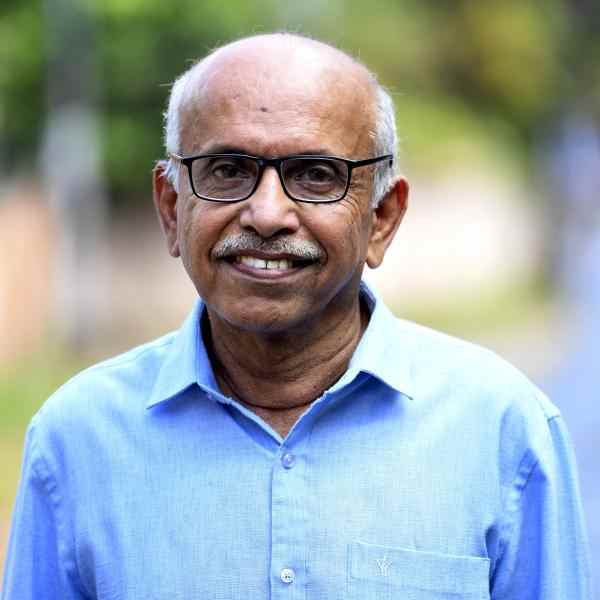
Dr. MR Rajagopal
Introduction
Dr. M. R. Rajagopal redefined the purpose of healthcare by shifting it from a system centered on curing disease alone to one that is accountable for relieving suffering, upholding dignity, and enabling patient agency. He embedded this empathetic redefinition into the medical system itself, institutionalizing a compassion-based approach to care that places pain relief at its core. Through pioneering palliative care in India, he is ensuring that these values are not episodic, but systemic. By grounding this model in community-based care and extending it to low-income and underserved populations, he has enabled a nationwide shift in how pain, terminal illness, and end-of-life care are understood and delivered.
The New Idea
Dr. Rajagopal's core idea is fundamentally redefining one critical aspect of the healthcare sector in India: bringing humanity to patients’ treatment and to relief from pain and suffering. He has been championing for pain relief to be a core obligation of medicine, on par with curing disease, and must be institutionalized across systems rather than left to individual discretion.
When Dr. Rajagopal began his work on pain relief in the early 1990s, this idea did not exist within India’s healthcare system. Medicine was organized around diagnosis and cure, with little recognition of pain, dignity, or the lived experience of patients as legitimate clinical priorities. Palliative care was absent from education, unsupported by policy, and constrained by regulations that made even essential pain medication inaccessible. Suffering was treated as inevitable, and empathy as well as compassion as optional.
At the heart of his idea is a reframing of medicine itself: from a system focused on curing disease and prolonging biological life, to one that recognizes dignity, agency, and relief from suffering as legitimate clinical outcomes. Crucially, he recognized that such a shift could not remain conceptual and it had to be embedded into the structures that define how healthcare is taught, regulated, and delivered.
Dr. Rajagopal's innovation lies in institutionalizing the focus on pain relief and suffering with compassion by implementing several approaches where dignity and pain relief is an everyday paradigm. These practical implementations spread to all across India and what had once existed only in isolated pockets became a national care architecture, where assuaging suffering itself became a medical responsibility, where dignity became a standard of care. His work has ensured that compassionate, patient - centered medicine was no longer dependent on individual goodwill, but structurally embedded into how healthcare is designed, taught, and delivered in India.
The Problem
India’s healthcare system historically prioritized disease treatment and prolonging biological life over alleviating human suffering. Patients with chronic and life-limiting illnesses often endured severe pain, emotional distress, and loss of dignity, with little systemic support. Families were left to manage complex care needs on their own, while caregivers faced significant emotional and psychological strain. For patients this translated into untreated pain, psychological trauma, depression, loss of agency, and in many cases, the stripping away of decision - making capacity at the most vulnerable moments of life. In India it meant a healthcare system that preserved organs but abandoned humanity, where survival was prioritized over dignity, and treatment replaced care. This was not simply a gap in service delivery, but a sector level failure.
Historically, in the 1980s, only 0.4% of India’s population had access to pain relief; it climbed to 1% in the 1990s and in the start of 2000s, only 4% had access. Interestingly, the state of Kerala - where Dr. M. R. Rajagopal’s work was concentrated around in the 80s, 90s, and at the start of 2000s, was home to 3% of the Indian population; under Dr. M. R. Rajagopal’s interventions Kerala state implemented the first health policy in the area of palliative care in the 2000s, which clearly indicates that the remaining 1% of population with access to palliative care belonged to the rest of the country.
There was no policy framework for palliative care, no formal training for doctors and nurses, and significant regulatory barriers that restricted access to opioid-based pain relief. In a 2017 Lancet Commission report co - authored by Dr. M. R. Rajagopal, it is found that more than 61 million people live in pain and suffering worldwide every year without access to palliative care. About 10 million people in India are estimated by the Indian Association of Palliative Care to be suffering from severe, unmanaged pain every year and lack access to palliative care. The medical educational curriculum for doctors and nurses did not include palliative care as a subject until 2019 and 2022 respectively. Some states like Kerala and Tamil Nadu had state level efforts towards integrating palliative care in the healthcare system at panchayat level, but without a uniform national policy, palliative care was irregular and often accessed only during the last few days of the terminally ill patient.
Prior to the early 2000s, access to palliative care in India was almost nonexistent. Opioid access for pain management varied arbitrarily across states due to rigid interpretations of the Narcotic Drugs and Psychotropic Substances (NDPS) Act, making morphine legally inaccessible to those who needed it most. Despite being one of the largest producers of medical opioids, India denied access to most patients due to restrictive laws and fragmented implementation. As a result, pain remained untreated for millions, and suffering was normalized within the healthcare experience.
The system was designed to extend life at any cost, often resulting in prolonged interventions without attention to quality of life or patient agency. In practice, this meant that healthcare preserved biological function while neglecting human dignity. Patients were treated clinically but abandoned experientially, and the absence of pain management often compromised their ability to make decisions or engage meaningfully with their own care. Dr. Rajagopal identified this as a deeper contradiction within healthcare itself: a system capable of advanced medical intervention, yet structurally unable to respond to suffering.
The Strategy
Dr. M. R. Rajagopal’s strategy has been anchored in a fundamental redefinition of healthcare - from a sector primarily focused on curing disease to one that is equally accountable for relieving suffering, preserving dignity, and enabling patient agency. His long-term goal has been not to build parallel services, but to normalize palliative care as an inseparable, default component of healthcare systems, ensuring that no patient suffers due to systemic gaps in pain relief or end-of-life care. Through founding Pallium India in 2003, he has designed a systemic approach that works simultaneously across demonstration of viable care models, large-scale capability building, and structural transformation through policy and regulation, embedding compassion-based care into how healthcare is designed, taught, and delivered across India.
At the core of this approach is the Demonstrate–Educate–Facilitate (D–E–F) model, which creates a pathway from proof of concept to national scale. Dr. Rajagopal began by building deeply integrated, patient-centered models of care that could serve as living demonstrations of a reimagined healthcare system. Through institutions such as the Trivandrum Institute of Palliative Sciences, Pallium India delivers a continuum of care—including in-patient, out-patient, home-based, and rehabilitative services—extending care beyond hospitals into communities. These centers address medical, psychosocial, and spiritual dimensions of care, enabling dignified end-of-life support, often within patients’ homes. This community-integrated approach, rooted in earlier work through the Pain and Palliative Care Society, shifts care from being hospital-dependent to community-owned, making it both scalable and locally adaptable.
Recognizing that systems change requires a shift not only in infrastructure but in mindset and skills, Dr. Rajagopal has invested deeply in transforming how healthcare professionals are trained and how care is understood. Through Pallium India, structured education programs of over 22 types of on-site trainings along with virtual modules—have reached doctors, nurses, volunteers, and caregivers across 59 cities, building a nationwide ecosystem of practitioners equipped to deliver palliative care. These programs go beyond technical instruction to reorient practitioners from a “survival-at-all-costs” approach to one that prioritizes dignity, quality of life, and patient choice. This effort has also translated into deep structural shifts within the medical education system: in 2010, Palliative Medicine was formally recognized as a postgraduate specialty by the Medical Council of India, and palliative care was integrated into medical and nursing curricula nationwide. As of 2025, postgraduate training pathways are embedded across 776 medical colleges, with over 50 institutions actively seeking Pallium India’s support to establish in-patient palliative care services. A critical element of this approach has been linking training with access - Pallium India serves as a nodal institution for opioid access education, enabling professionals to obtain regulatory approvals, resulting in the facilitation of 72 registered medical institutions with legal access to opioid medications.
To enable scale, Dr. Rajagopal has focused on facilitating replication across institutions rather than centralizing service delivery. Pallium India has supported the establishment of more than 226 palliative care centers across 28 states and 3 Union Territories, with over 70 centers operating independently or in partnership with government hospitals, including in underserved and remote regions. Through regional facilitation teams, institutions are supported end-to-end—from training personnel and setting up clinical systems to securing licenses and ensuring access to essential medicines—allowing them to independently run sustainable palliative care services while maintaining quality standards. These centers extend care into communities through structured home visits, where medical teams, alongside volunteers, address not only clinical needs but also broader social determinants affecting patients and caregivers, reinforcing a model where care is both medically sound and socially responsive.
Through decades of institution - building, policy changes, community ownership, national advocacy and developing national training and service infrastructure, he embedded pain management into medical education, clinical practice, and healthcare structures. Complementing physical infrastructure, Dr. Rajagopal has integrated telehealth into his strategy to extend reach and ensure continuity of care. TeleHealth run by Pallium India is India’s first dedicated virtual consultation and helpline for palliative support, where doctors, nurses, and social workers are available through Interactive Voice Response systems and video consultations. This has been particularly critical in reaching remote and underserved populations, reducing dependence on hospital-based services and ensuring continuity of care across geographies.
As the idea scaled, Dr. Rajagopal recognized that lasting change required structural legitimacy through policy and policy adoption. In 2008, he was instrumental in shaping Kerala’s State Palliative Care Policy - the first in India - which established a precedent for integrating palliative care into public health systems and became widely known as the “Kerala Model.” Under this policy, a decentralized system was created where every panchayat employed a trained palliative care nurse, funded through the National Rural Health Mission and trained through Pallium India’s programs. Building on this success, he led the development of the National Standards for Palliative Care and subsequently contributed to the establishment of the National Programme for Palliative Care (NPPC) in 2012, formally integrating palliative care into mainstream healthcare services nationally. Recognizing that national policy must be complemented by state-level implementation, he went on to support policy adoption across nine states, enabling replication of the Kerala Model across diverse contexts. More recently, states such as Karnataka and Telangana, along with the Union Territory of Lakshadweep, have worked with Pallium India to fully integrate the Demonstrate–Educate–Facilitate model into their public health systems, while states including Haryana, Himachal Pradesh, and Maharashtra, along with the Andaman & Nicobar Islands, have partnered to adopt Pallium India’s training model for capacity building. His work has also extended into fragile regions such as Kashmir and into international contexts like Bangladesh, where access to basic palliative care is often disrupted.
Alongside these lines, Dr. Rajagopal led sustained national advocacy to address one of the most critical barriers to pain relief. Under the 1985 Narcotic Drugs and Psychotropic Substances Act, access to morphine was extremely restricted; through nearly eight years of advocacy, he contributed to the 2014 amendment that created a centralized regulatory framework and unlocked legal access to opioid medications across India. Pallium India’s institutional leadership in this space is globally recognized—it was designated a World Health Organization Collaborating Centre for Training and Policy on Access to Pain Relief for the South-East Asia region in 2012 and has held consultative status with the United Nations Economic and Social Council (ECOSOC) since 2022, reinforcing its role in shaping both national and international frameworks for palliative care.
A defining feature of his strategy is its deliberate sequencing - starting with community-rooted models, expanding through capacity building and institutional partnerships, and culminating in policy transformation. This integrated approach has led to large-scale systemic outcomes: from a context where less than 1 percent of the population had access to pain relief in the 1980s and only about 4 percent in the early 2000s, palliative care is now structurally embedded across states, health systems, training institutions, and policy frameworks, with an estimated 300 million people having access to pain relief and approximately 1.5 million cancer patients benefiting from opioid-based pain relief at any given time.
Through this multi-layered strategy, Dr. Rajagopal is not only expanding access to palliative care but fundamentally redesigning healthcare systems so that compassion, dignity, and pain relief become non-negotiable standards of care - shifting them from the margins to the mainstream of medical practice. By integrating palliative care into medical education, clinical systems, regulatory frameworks, and national policy, he transformed relief from suffering into a standard expectation of healthcare. At a sectoral level, Dr. Rajagopal’s work transformed palliative care from a marginal idea into an integrated pillar of healthcare in India.
The Person
Dr. M. R. Rajagopal’s changemaking journey is deeply rooted in his early disposition and lived experience. As a child, he was quiet and observant, often placed in classrooms with peers several years older than him. This early sense of being an outsider shaped his habit of noticing what others overlooked, a perspective that would later define his approach to rethinking healthcare.
His professional turning point came during his work as an anesthetist, where he repeatedly encountered patients enduring severe, untreated pain and undignified deaths. One experience in particular left a lasting imprint. A patient in his forties, a professor, chose to end his life when he could no longer find dignity in living with advanced cancer. This moment crystallized Dr. Rajagopal’s conviction that healthcare must extend beyond treating disease to addressing human suffering in its entirety. It marked the beginning of a lifelong commitment to ensuring that no individual is left to endure avoidable pain or die without dignity.
From the early stages of his career, he chose to challenge dominant medical paradigms rather than conform to them. At a time when palliative care was neither recognized nor understood, he pursued the idea with persistence, building it from the ground up. For Dr. Rajagopal, palliative care was not only about pain relief, but about restoring dignity across physical, psychological, social, and spiritual dimensions of suffering. He reframed care itself as the protection of human meaning, not just the management of symptoms.
Over nearly four decades, Dr. Rajagopal has built not just organizations but an entire field. He founded the Pain and Palliative Care Society, Pallium India, and the Trivandrum Institute of Palliative Sciences, while leading the development of national systems for training, service delivery, research, and policy advocacy. His leadership combines clinical credibility with moral authority and systems thinking, enabling him to work effectively across communities, healthcare institutions, government systems, and global platforms. He is widely recognized as the Father of Palliative Care in India.
His contributions have been acknowledged both nationally and internationally. Dr. Rajagopal has been termed as “the father of palliative care in India' by New York Times in 2007. He was awarded the Padma Shri in 2018 for his service to healthcare and has been nominated for the Nobel Peace Prize in 2018 and 2023. Pallium India received the IAHPC Institutional Recognition Award in 2022 for its work in middle-income countries. He has also received the Alison Des Forges Award for Extraordinary Activism from Human Rights Watch and was named among the most influential leaders in hospice and palliative medicine globally.
Dr. Rajagopal has contributed significantly to global thought leadership in this field. He is a lead author of the Lancet Commission Report and the “Value of Death” report and has engaged with practitioners and institutions worldwide to advance system-level approaches to end-of-life care. His personal philosophy captures the breadth of his vision: healthcare must be preventive, promotive, curative, rehabilitative, and palliative. At its core, his work is driven not by institutional ambition but by a commitment to cultural transformation, where compassion becomes structural, dignity becomes standard, and humane care becomes the default experience of healthcare. He also mobilized communities and medical professionals as co-creators of this system.