 Ashoka
ASN Spotlight
Severine de Sadeleer
ASN member since 2023
Belgium
As education systems worldwide struggle with fragmentation and inequality, social entrepreneur and public health anthropologist Séverine de Sadeleer is reshaping how children learn to understand themselves and others. In this Interview, led by ASN Global Communication Manager Yuliya Koroleva, Séverine introduces AMA la Girafe, the fast growing initiative connecting classrooms across continents to build empathy, curiosity, and emotional intelligence. Drawing on her years in African public health missions and her leadership roles across Europe — Séverine merges scientific insight with a deep commitment to inclusive education.
How would you introduce AMA la Girafe and your mission?
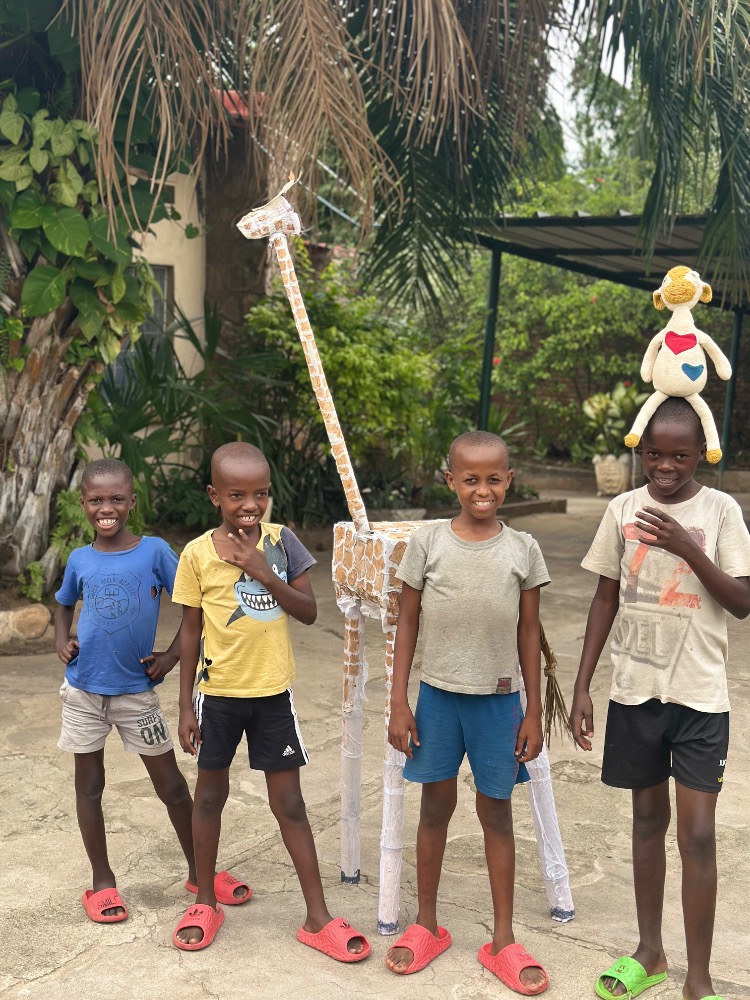
AMA la Girafe is an EdTech platform that connects classrooms around the world. We provide teachers with educational content on themes like citizenship, culture, creativity, emotional intelligence, and the environment. Teachers choose activities to do with their students, and then share pictures, videos, and reflections on the platform. Classrooms are grouped in clusters of five — for example, a class in Canada connected with classes in Belgium, France, Rwanda, and Senegal. They exchange glimpses of their daily lives and projects. It’s a simple but powerful way for children to understand each other and the world. Our educational solution also includes a tangible element: a soft toy giraffe named AMA (from the Spanish amar, “to love”). When AMA enters a classroom, something magical happens. Teachers tell us that shy children suddenly open up, speak, and participate. It builds confidence, enthusiasm, and connection. Today we work with around 600 schools worldwide (17 countries), and my ambition is to reach many more. Some things in life don’t feel like choices — they feel like impulses that are stronger than you. AMA la Girafe came to me like that. It spoke so loudly that I had no choice but to act.
What are the barriers to scaling AMA, and how can ASNs help?
Education systems can be quite static and slow to change. Funding is a major barrier — schools often have no budget, so we rely heavily on grants. Ideally, I would love to see solutions like AMA fully integrated into official education systems. Another challenge is access: scaling globally requires connections with ministries, school networks, and institutions. This is where ASN members and Ashoka Fellows, especially those connected to businesses and CSR initiatives, can play a crucial role — by opening doors, supporting funding, and connecting us to new networks of schools and associations.
What results have you observed, and how can ASNs help in strengthening them?
We see children becoming more curious, more confident, more empathetic. They open their eyes to other cultures — and also to diversity within their own country. In Belgium, for example, a school in Brussels South and a school in Arlon can have completely different daily realities. Connecting them is already powerful. Teachers also tell us that AMA helps them break out of rigid curricula. In some African schools, learning is still very traditional — memorization, little room for creativity or project based learning. AMA gives them a way to introduce new methods, new challenges, new forms of expression. ASN members can help in many ways: connect us with networks of schools — anywhere in the world; help us build more systematic impact within education systems, which are often slow to adopt innovation; co create educational content on our themes (citizenship, culture, creativity, emotional intelligence, environment).
You have a foot in both worlds — ASNs and Fellows. Where do you see the biggest wins for collaboration?
There is so much potential. Both groups are incredibly complementary, but we don’t leverage that collective intelligence enough. Everyone is fighting for their own cause across different fields and communities. All these causes are extremely valuable but imagine if we identified one big idea that overlaps all our missions and worked on it together. We would be much stronger. Ashoka is uniquely positioned to make this happen.
What could be that “one big bold idea”?
Love, well-being, happiness — these are universal and deeply human values. If we focus on spreading more happiness and helping people reconnect with their purpose, everything else will follow. Supporting people — especially children — in discovering their purpose and their ability to make a positive impact can be truly transformative.

Full Interview Inside.
Explore the full depth of this compelling conversation and access the complete interview.