 Ashoka
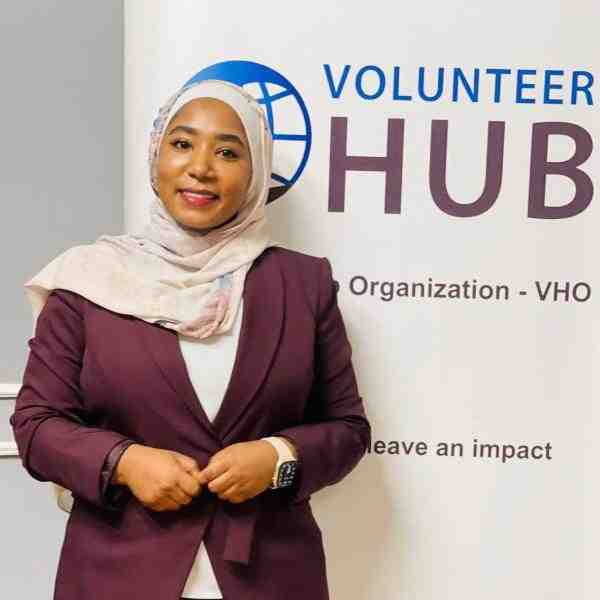
Maysaa Mahjoub
Introduction
Maysaa is transforming how refugees are perceived—both by society and by themselves. By empowering refugee groups and fostering community-driven volunteer networks, she is helping to shift the narrative from refugees as a burden to refugees as active contributors to hosting societies.
The New Idea
Maysaa is transforming the perception of African refugees in Egypt, from being perceived as a burden to being recognized as contributing members of the society. As an immigrant herself, Maysaa brings a deep, lived understanding of what it means to be marginalized, disregarded and treated as temporary. She is reversing the narrative of marginalization by empowering youth African refugees to take ownership of their role in the community through structured, purposeful volunteering. She activates the agency of youth, empowering them to become active changemakers woven into Egypt’s social fabric rather than passive beneficiaries of help.
To bring this idea to life, Maysaa started working directly with youth African refugees, empowering them to reclaim their agency through meaningful, structured, volunteer work. She recognized that when refugees are equipped with the necessary resources to help themselves and others, they begin to perceive themselves differently, and society does as well. Her approach goes far beyond symbolic inclusion; it emphasizes genuine, tangible and visible engagement. Refugee youth are equipped with the skills to lead initiatives that address social challenges both within their own communities and in the broader Egyptian context, fostering a new narrative of belonging and contribution.
In addition, Maysaa has designed a two-tiered system that promotes social responsibility from a young age. For children between the ages of 7-17, she has developed a curriculum that instills the values of empathy, contribution, and civic engagement. For youth between the ages of 18-40, she provides practical training and leadership development to equip them to design and lead volunteer efforts. This structure ensures that volunteering becomes a lifelong habit, not a one-time activity, and that each generation is prepared to mentor the next, creating a self-sustaining cycle of empowerment and community building
Ultimately, Maysaa is not just filling gaps in refugee support; she is redefining what it means to belong. In a country where African refugees are often overlooked or seen as transient, she is quietly building a new reality: one where young refugees are already contributing, already leading, and already shaping the future of the communities they inhabit.
The Problem
For a long time, African refugees in Egypt have been viewed as a burden on their host communities, rather than as valuable assets. Unlike other groups, such as Syrians and Iraqis, these African communities frequently face significant marginalization and discriminatory practices. This is due to a combination of material and systemic issues that severely hinder their integration and overall well-being. UNHCR reports that as of March 31, 2025, Egypt hosts over 941,625 registered refugees and asylum-seekers from 61 nationalities, with a substantial portion coming from African countries like Sudan, Eritrea, Ethiopia, and Somalia.
The material problems these groups encounter create substantial difficulties in integrating into Egyptian society. Social isolation is a pervasive issue, as cultural and linguistic barriers often lead to profound feelings of disconnection from the broader society. Many non-Arabic-speaking refugees, particularly from African countries, face significant linguistic barriers that exacerbate their isolation and limit their ability to access services and integrate. This lack of social integration makes it incredibly challenging for individuals to access vital support networks and can perpetuate a sense of otherness. Furthermore, economic hardship is widespread, with many facing persistent unemployment and underemployment. Refugees in Egypt are often without the right to work in the formal sector, leaving them dependent on high-risk jobs in the informal economy without any labor protection. A UNHCR vulnerability assessment indicated that 8 out of 10 refugees in Egypt were unable to meet their basic needs even before recent economic challenges, and some estimates suggest that the percentage of refugees living below the national poverty line is as high as 84%.
These material challenges are compounded by deep-seated systemic problems within Egypt's existing frameworks and societal attitudes, which consistently fail to adequately support their integration and well-being. There's a notable lack of comprehensive support programs designed to facilitate long-term integration, ranging from language acquisition to professional development and psychological support. UNHCR itself has been forced to suspend key life-saving support, including medical treatment and child protection services, due to critical funding shortages, leaving tens of thousands without vital aid. Moreover, these communities endure various discriminatory practices, both overt and subtle, impacting their access to housing, employment, education, and essential services. Reports indicate "anti-black" sentiments and discrimination have been ongoing for decades, particularly towards Sudanese and other African refugees, with instances of harassment, bullying, and even violence.
A fundamental issue at the heart of these systemic failures is a general lack of awareness regarding their potential contributions. Society often perceives these communities solely through the lens of need, overlooking their diverse skills, rich cultures, and the significant economic and social contributions they could make. This lack of recognition actively prevents the development of policies and initiatives that could harness their untapped potential for the benefit of Egyptian society as a whole.
This challenging landscape underscores the urgent need for a transformative approach. Such an approach must shift prevailing perceptions and actively empower African communities to become recognized and valued contributors, moving beyond their current status as an overlooked and underserved population.
The Strategy
Maysaa’s journey began with a deep personal understanding of the refugee experience. She was able to observe firsthand the loss of agency, marginalization and invisibility that define the experiences of refugees and mgrants in Egypt, since she was an immgrant herself. Maysaa saw this reality as a call for action rather than accepting it as it is. She believed that amid the refugee crisis, dignity, identity and the right to contribute were more significant than aid. Her mission became clear: to transform refugees from passive recipients of help into active leaders of change.
In 2014, Maysaa started planting the seeds of leadership. She began visiting refugee community schools in Cairo to educate small groups of about 30 refugee children a week about volunteering, empathy, and social responsibilities. She believes that fostering a feeling of purpose at a young age could counteract the negativity that is embedded in refugee life. Despite early opposition from school officials and families, her initiative gradually expanded. By 2025, she had served more than 20,000 refugee children from Somalia, Ethiopia, and Sudan in 21 community schools in Egypt. What started as informal sessions evolved into structured workshops with curricula focused on civic engagement and collective responsibility. Teachers reported significant changes in students—greater confidence, increased cooperation, and a noticeable sense of ownership over their roles in the community.
Maysaa’s foundational work with children paved the way for a transformative initiative focused on empowering refugee youth as community leaders. In 2015, in response to the growing sense of isolation and disillusionment among older refugee youth, she launched her first intensive volunteer training program targeting 50 Sudanese participants aged 18 to 40. This seven-day program was not merely about acquiring skills—it was a powerful redefinition of identity and purpose. The training focused on active citizenship, the role of volunteerism, and the potential of entrepreneurship as pathways to integration and self-reliance. Participants who once perceived themselves as burdens began to recognize their capacity to contribute meaningfully to their host communities. This shift—from victimhood to leadership—was deeply personal, visible, and inspiring. The training centered on active citizenship, the role of volunteerism, and the potential of entrepreneurship as pathways to integration and self-reliance. Over 30% of participants initiated entrepreneurial projects, applying their ideas to create value within their communities. Additionally, 60% engaged in volunteer work, either with Maysaa’s initiatives or through partnerships with local and international organizations. By fostering agency, dignity, and a sense of belonging, the program catalyzed a ripple effect of community engagement and demonstrated that sustainable humanitarian response is rooted not only in aid, but in empowerment and participation.
In 2016, Maysaa expanded her model by addressing a critical gap faced by Sudanese refugee students in Egypt preparing for the embassy high school exams. Many of these students, unable to afford private tutoring, were at risk of academic failure and further marginalization. To respond to this challenge, Maysaa mobilized 16 previously trained university-level migrants and refugee volunteers to deliver free remedial classes. However, securing a venue proved difficult. Undeterred, Maysaa proactively engaged with the Sudanese Embassy, presenting her initiative and requesting access to a suitable space. Impressed by her vision, the Embassy offered the newly established House of Sudan as the program’s venue. This marked a pivotal moment—not only for the students, but for the broader refugee community’s sense of agency and recognition. Of the 51 students who enrolled, 39 successfully graduated, with many later joining Maysaa’s expanding volunteer network. This initiative became a powerful symbol of community-led resilience: refugees supporting refugees, reclaiming their futures, and demonstrating their leadership and value to both themselves and the host society.
Building on these early wins, Maysaa adopted a Pan-African approach. She realized the challenges faced by Sudanese youth mirrored those of Somali, Ethiopian, and Eritrean refugees. Her solution: a two-tiered volunteer model that nurtures social responsibility from childhood to adulthood. For children aged 7–17, she introduced a structured curriculum centered on empathy, civic duty, and collective action. For youth aged 18–40, she launched training programs focused on leadership, communication, and project design. This layered approach ensured that volunteering wasn’t a one-time act—it became a lifelong practice. It created a generational cycle of mentorship where each group was empowered to guide the next—further reinforcing the image of refugees as change-makers.
By 2020, Maysaa’s approach had evolved into a dynamic, youth-led movement. She identified and trained a core group of 20 community-based changemakers, equipping them not only with essential soft skills but also with access to real, tangible opportunities. In parallel, she strategically leveraged partnerships with organizations such as international and local NGOs to connect these trained volunteers with paid volunteering roles and internships—positioning them as active contributors within Egypt’s civic and professional spheres. These placements were intentionally designed to go beyond symbolic inclusion. They served as proof points that refugee youth could lead, organize, and deliver meaningful results. To ensure the sustainability and scalability of this transformation, Maysaa introduced a cascading mentorship model: experienced volunteers became ambassadors, responsible for training and mentoring new cohorts. This peer-led system created a powerful multiplier effect, rapidly expanding both the reach and depth of the initiative. By 2024, the movement had grown to include more than 1,500 active African refugee volunteers and formalized partnerships with more than five local and international NGOs, successfully integrating over 400 refugee volunteers into existing programs. These young leaders not only served their communities but also became visible role models, reshaping narratives around displacement. Their leadership demonstrated that refugee youth are not passive recipients of aid, but agents of change capable of driving social cohesion, resilience, and inclusive development.
Recognizing the importance of scale, connectivity, and visibility, Maysaa digitized her volunteer network in 2020. She launched an integrated online presence through a dedicated platform, WhatsApp groups, and active engagement on social media channels such as TikTok, Instagram, and Facebook. These digital tools significantly enhanced coordination, improved volunteer retention, and amplified the movement’s visibility among refugees and host community youth. Building on this momentum, Maysaa is preparing to launch Be-hive in late 2025—an innovative digital platform designed to connect refugees across borders through online volunteering and freelance opportunities. Be-hive operates on a credit-hour system, allowing users to accumulate verified experience through remote engagements. Upon completing a set number of hours, participants receive a certificate of completion, validating their contributions and enhancing their eligibility for on-ground volunteering roles wherever they reside. The certificate explicitly acknowledges their refugee status while affirming their capacity to contribute meaningfully to host communities. Although the platform has not yet officially launched, it has already attracted over 3,000 applications, underscoring both the demand for such a solution and the trust Maysaa’s model has built.
Maysaa also embedded financial sustainability into her model. In 2022, after receiving a $10,000 grant, she made the strategic decision to invest, not in one-off programming, but in a permanent community hub near Cairo University. The space now functions as a training center, co-working hub, and income-generating venue, reducing the organization’s dependence on donor funding while providing a safe, central place for refugees to learn, connect, and grow.
At its core, Maysaa’s strategy is not about charity—it’s about systems change. Each initiative is designed to reinforce the next, building a model that moves refugees from marginalization to leadership. Through early education, structured volunteerism, cross-community collaboration, and sustainable growth, she is demonstrating that refugees are not the problem—they are, in fact, a powerful part of the solution. By 2027, Maysaa plans to grow her volunteer network to 3,000 active members, expand her digital platform across borders, and establish new community hubs that integrate training, mentorship, and social enterprise. Her goal is to reach the majority of African refugees in Egypt with this model, creating a nationwide movement of youth-led engagement. Beyond Egypt, Maysaa is exploring opportunities to adapt her approach in other countries with significant refugee populations where she envisions similar youth-driven initiatives that foster inclusion, leadership, and community impact
The Person
Maysaa’s journey as a changemaker is woven into the fabric of her childhood. As an immgrant herself, she grew up among Egypt’s African refugee community, so she was well acquainted with the suffering caused by exclusion and the difficulties associated with belonging. She had a heightened sense of empathy, from an early age, not because it was taught to her but rather because it was a part of her. She knew what it was like to be viewed as “other”, to be misinterpreted, ignored, and overlooked in every social setting. But instead of allowing these experiences to close her off, they ignited something uncommon for a child: an early entrepreneurial mindset driven by the urge to change the conditions around her.
As a Sudanese girl in a public school in greater Cairo, Maysaa quickly became aware of how identity shaped social dynamics. She was often bullied and isolated because of her dark skin and Sudanese roots. Parents even attempted to move their children away from her in class, treating her presence as a social liability. However, these painful experiences became the ground on which she built resilience. When her school principal publicly intervened—placing Maysaa at the front of the class and taking a stand against discrimination—it lit a fire in her. She realized that leadership could begin early, and from that point on, she made it her mission to shift perceptions, not just for herself but for her entire community.
From a young age, Maysaa demonstrated a natural entrepreneurial mindset, turning obstacles into opportunities. Faced with bullying and isolation at school, she responded not with retreat but with creative action. She launched informal initiatives in her classroom—organizing cleaning teams, leading group projects, and transforming moments of conflict into collaboration. Her instinct was always to lead through inclusion. She used empathy as a tool, not only to protect her younger siblings and cousins, but to challenge the social narratives that devalued them. These early efforts revealed a core part of her identity: Maysaa was a builder of solutions, even before she had the language of entrepreneurship.
That drive matured as she grew older. During her university years, she sought out opportunities that allowed her to bridge divides between refugee and Egyptian youth. She often used her own limited allowance to join intercultural dialogues and volunteer-led educational programs. These were not just extracurricular activities—they were her first prototypes in social innovation. When a student once cried after learning that Maysaa was only a volunteer and not a full-time teacher, she began rethinking the power of volunteerism. From that point on, she wove lessons about leadership and community service into every session she led. This was the seed that would later grow into the Volunteer Hub Organization (VHO).
Her creativity consistently translated into long-term impact. Observing the sense of aimlessness among many young Sudanese in Cairo, Maysaa developed Mashroou Ensany—a school-based workshop series that positioned volunteerism as a path to purpose and leadership. Though initially dismissed as idealistic, Maysaa spent four years immersing herself in the ecosystem—volunteering with local NGOs, attending social entrepreneurship workshops, and cultivating relationships. These efforts culminated in national recognition, including a volunteerism award from the League of Arab States and an ambassadorship through Her Highness Sheikha Fatma Bint Mubarak’s initiative. She later presented her model at the World Youth Forum, where she addressed the Country President directly. Later, during the Sudanese civil war and the COVID-19 border closures, she mobilized emergency teams, coordinated humanitarian logistics, and directly negotiated with officials to return stranded refugees to safety. These moments revealed her capacity to lead under pressure and adapt solutions in real time—hallmarks of true entrepreneurial leadership.
When conflict escalated in Sudan in 2019, Maysaa felt compelled to act, despite having left the country decades earlier. Against her parents’ wishes, she joined “Al Hadereen,” helping war-affected refugees access medical care. Her leadership was tested again during the pandemic, when ten buses of Sudanese refugees were stranded at the Egypt-Sudan border. With only a WhatsApp group and a few friends, she traveled to Aswan, faced a hostile crowd, and negotiated with the consul to allow the buses to return to Cairo. Over the following days, she and her team provided food, medical aid, and emotional support, ultimately convincing four buses to turn back safely. It was a defining moment—proof of her ability to lead in crisis and rally others in uncertain times.
Today, Maysaa leads one of Egypt’s most dynamic refugee-led volunteer networks, but her story is not about a sudden rise. It is the natural evolution of a young girl who learned early that systems don’t change on their own—they’re rebuilt by those who dare to imagine better ones. Her creativity, problem-solving, and lifelong commitment to action define her not only as a leader, but as a visionary entrepreneur reimagining what it means to be a refugee: not a burden, but a builder of society.