 Ashoka
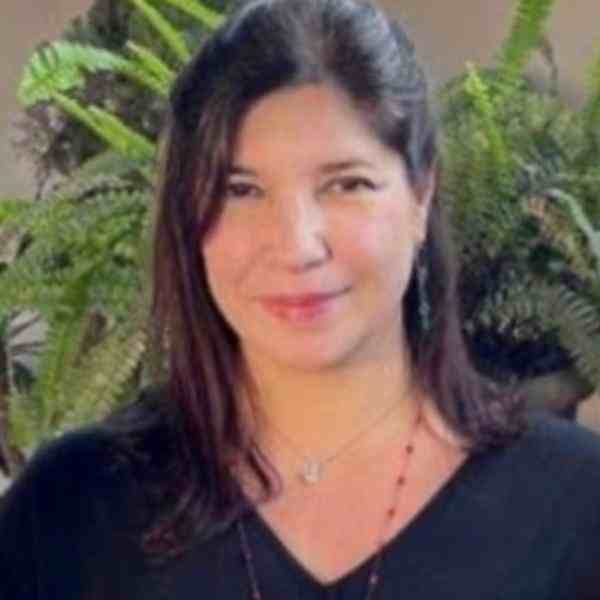
María Teresa Quispe Vargas
Grupo de Trabajo Socioambiental WatanibaIntroduction
Maria Teresa is forging connections between indigenous communities and Western culture, with the dual goal of, on the one hand, safeguarding the Amazon, upholding community rights, and enhancing their quality of life through governance and economic models merging ancestral wisdom with new tech. And on the other, empowering Western society to embrace indigenous knowledge as a tool for harmonious coexistence with nature, a potent force in combating climate change.
The New Idea
Maria Teresa Quispe has developed a governance and economic model aimed at restructuring the relationships of indigenous communities in a way that resonates with the world. This model, designed to address the various challenges these communities face, is based on the deep connections Maria Teresa has forged through trust and collaboration with indigenous communities.
Maria Teresa educates these communities on how to protect their territories from destructive activities, while also encouraging them to propose their own solutions to problems. This approach has consolidated a unified voice for organized indigenous communities throughout the Amazon Corridor, which includes Venezuela, Brazil, Colombia, and Ecuador. Maria Teresa utilizes media platforms to amplify the visibility of the issues these communities face, thus bringing them to the forefront of the public agenda. Her efforts have significantly influenced public policies, empowering Amazonian indigenous communities to exercise their social and environmental rights.
Maria Teresa facilitates a connection between ancestral knowledge and modern languages, empowering these communities through the use of technology and information. This not only aids in the preservation of their sacred places against illegal activities, but also coincides with areas of high biodiversity as confirmed by satellite technology. This detection system works in collaboration with a network of approximately 300 young indigenous individuals. Maria Teresa provides them with cartographic and georeferenced tools, as well as technical support, enabling them to better manage their territories and influence public discourse on issues that affect them. Remote sensing tools are combined with traditional ecological knowledge. She also equips these communities with legal tools such as culturally appropriate fees and protocols for prior and informed consent, enhancing their ability to assert their rights.
Recently, Maria Teresa introduced a new economic model to these communities. Its innovation lies in the exchange of values she proposes, which permeates both cultures. For the West, it introduces a new way of coexisting with nature, incorporating a sense of happiness and spirituality in harmony with the environment. This model provides a blueprint for a new way of living, eating, consuming, and being present, while Western contributions to indigenous communities include the concept of future preservation for ensuing generations, clean technology, and more environmentally friendly economic development models to mitigate extractive activities, deforestation, and burning. Besides fostering a mutually beneficial exchange relationship, Maria Teresa aims to dispel the notion of indigenous people as museum pieces. They are not a museum.
The Problem
Deforestation in Venezuela and Latin America is a significant global problem. It is estimated that, between 2001 and 2020, approximately 43 million hectares of forest were lost in the Amazon region. This loss is nearly twice the size of Germany. The situation in Venezuela is particularly alarming, with an estimated loss of over 2 million hectares of forest in recent decades. It is believed that around 80% of mining in the Orinoco Mining Arc region is illegal and informal. Moreover, there have been documented cases of human rights violations and socio-environmental conflicts related to mineral extraction, particularly in areas inhabited by indigenous communities. These communities have experienced invasions and threats by irregular groups, forcing them to abandon their community rules.
There are significant challenges facing indigenous communities, especially those in their relationship with the Western logic represented by the State and the private sector. One of these challenges is the lack of cooperation between the organizational traditions of indigenous communities and Western logic. This is manifested in the lack of a governance model that integrates indigenous and Western perspectives in the territory, making it difficult to manage resources, defend human rights, and implement public policies to protect ecosystems and access services for these communities. As an example, the absence of adequate regulations and transparency in resource management has exacerbated the situation, leading to an increase in infectious diseases. This increase is a result of the introduction of external agents into these territories. The situation is even more dire in the midst of a national humanitarian crisis, where the ability to respond to diseases is severely limited due to the deterioration of health system infrastructure.
In addition, there is a knowledge gap between both societies. There is a need to adapt and translate Westernized knowledge so that it is relevant and respectful of indigenous culture, and vice versa, so that Western society understands the needs and perspectives of indigenous communities, as well as the contributions they have to offer to the world.
Another important challenge is Western technological knowledge, which could provide important tools to indigenous cultures with actions in the territory of indigenous communities to effectively address this global problem. Climate stability throughout the region is also at risk as forest loss and soil degradation increase the likelihood of extreme events like floods and droughts, threatening agricultural production and food security in the region.
Finally, the lack of effective cultural bridges hinders communication, cooperation, and trust-building, making it difficult to protect the Amazon, fight climate change, and guarantee human rights and basic services such as health and education for indigenous communities.
The Strategy
In line with the rest of the country, civil society in the Venezuelan Amazon was frail. Despite the 1999 Constitution granting Indigenous people several essential rights, there was no capacity or plan to safeguard and implement these rights. Maria Teresa quickly recognized the significance of Indigenous leaders and organizations in catalyzing change and enforcing their legally recognized rights. However, these leaders lacked a strategic plan, reacting more than proactively planning. Concurrently, there was a need for a team of professional allies knowledgeable about Indigenous and Amazonian issues, capable of working independently yet under a shared strategy.
In her initial stages, Maria Teresa concentrated on human rights while establishing the legal groundwork for protecting Indigenous territory in Venezuela. This involvement led her to work closely with communities and later expand her scope of action outward through networks, employing three primary strategies. Firstly, combining Western technology with Indigenous knowledge about the territory to provide invaluable data for its protection. Secondly, creating networks with organizations that have substantial impact throughout the Amazon to secure international funds and influence public policies. Thirdly, working with organized Indigenous communities to carry out governance actions, activities, and incentives with new economic models as equal partners. She strives to connect with the West beyond traditional models, where Indigenous people are seen as contributors to Western society rather than beneficiaries of Western charity. She has promoted locally and regionally socio-environmentally sustainable initiatives in the Amazon, with a special focus on Indigenous rights. She uses intercultural approaches and methods that balance traditional knowledge with the scientific method, an effort that neither ignores nor overvalues ancestral knowledge.
In 2005, after forming alliances with Indigenous leaders and several NGOs from other Amazonian countries (such as Brazil’s Socio-Environmental Institute - ISA and Colombia’s GAIA Amazonas Foundation), Maria Teresa established the first socio-environmental working group for the Amazon, Wataniba. She began by strengthening the technical capacities of communities and creating the communication, legal, and political channels to denounce pressures, threats, and challenges impacting the region. Thanks to her efforts, she was able to accomplish Presidential Decree No. 2,248 for the creation of the National Strategic Development Zone Orinoco Mining Arc, which bans any extractive activity in several national parks and a biosphere reserve. This achievement earned her credibility as a leader in the face of challenging tasks in a highly unstable and polarized Venezuela. Her influence on territorial processes aids Indigenous organizations in participating in territorial and socio-political policy formulation, particularly those for the Protection of Indigenous Peoples in Situations of Isolation and Initial Contact (PIACI). This has allowed them to create opportunities for productive entrepreneurship and design security protocols. Maria Teresa works to strengthen intercultural Indigenous courts and build bridges with official bodies in the country.
Maria Teresa has created one of the most significant networks in the Amazon, the Georeferenced Socio-Environmental Information Amazon Network (RAISG), a collaboration of eight civil society organizations working in six Amazonian countries: Bolivia, Brazil, Colombia, Ecuador, Peru, and Venezuela. This network is supported by about 300 young Indigenous people throughout the territory, who contribute to satellite images with on-the-ground information. These young people have become changemakers, incorporating technological systems and developing actions in the territory without abandoning their ancestral knowledge. The information they gather is also shared with scientists.
Additionally, Maria Teresa founded the Northern Amazon Alliance (ANA), in partnership with eight organizations, including GAIA AMAZONAS and Instituto de Pesquizas (IEPE), among others. They aim to promote the concept of ecosystem connectivity and the conservation of the Amazon, strengthen the governance of Indigenous peoples and local communities, and influence national and international agendas. Through this network, new models of cities and new ways of thinking about the world can be shared.
She also co-created the International Working Group for Protection of Indigenous Peoples in Situations of Isolation and Initial Contact (GTI-PIACI). Comprising 15 Indigenous organizations from eight countries and civil society members from Brazil, Bolivia, Colombia, Ecuador, Paraguay, Peru, Suriname, and Venezuela, they are committed to defending Indigenous Peoples in Situations of Isolation and Initial Contact.
These national and international networks have enabled her to impact six countries in the Amazon: Venezuela, Colombia, Bolivia, Peru, Ecuador, and Brazil. This impact reaches a direct population of more than 90,000 Indigenous people and an indirect population of more than 12 million belonging to Indigenous groups. It also contributes to the protection of more than 120,000 km in Venezuela and over 700 million hectares of Amazonian forest. In Venezuela, Colombia, Brazil, Ecuador, and Peru, she has helped to scale up successful intercultural experiences, gathering relevant biological and social information for global socio-environmental discussions. A remarkable example of this work is the creation of maps of Sacred Places with the Uwottüja People of Venezuela (20,000 inhabitants), where they have recently discovered that these sites collide with areas described by science as rich in precious metals and greater biodiversity, and constitute a contribution for verifying the existence and location of species not recorded in scientific literature.
Maria Teresa aligns her strategy with environmental protection and the empowerment of local Indigenous communities. In alliance with Acción Climática de Venezuela and working closely with Indigenous leaders, networks, and professionals from different disciplines, she utilizes ancestral Indigenous knowledge and the latest green technologies. This approach enables the proposal of new local economic models that can integrate into the global economy. For example, the cocoa project, based on saving funds managed only by women, has changed the perception of Indigenous women from mere artisans to women capable of participating in internal political relations and generating social impact.
Key contributors to Maria Teresa’s systemic change include Land is Life, Gaia Amazonas Foundation, Rewild (Leonardo DiCaprio Foundation), Swift Foundation, The Christensen Fund, Ford Foundation Brazil, Porticus, and Good Energy. These organizations provide not only funding but also experience and know-how. For them, information, networks, and access to these communities also constitute a fundamental value in the shared mission of preserving the Amazon and its ancestral cultures.
The Person
Maria Teresa Quispe was born in England and spent most of her childhood in Lima, Peru, and Buenos Aires, Argentina, before moving to Venezuela. She began her journey as a social entrepreneur in college. Raised in a middle-class Peruvian family that emigrated to Venezuela, she exhibited empathy, excellent communication skills, and the desire to broaden her worldview through social networking from a young age. In college, she pursued subjects related to environmental conservation and sociology.
Throughout high school and beyond, Maria Teresa worked in various fields. In college, she co-founded and led a working group named “UCAB Libre.” This group expanded over the years, establishing study groups, collective reflection groups with students and professors to enhance their chosen fields of study, particularly sociology, law, and economics. They also hosted expert speakers at university events to supplement the academic curriculum. UCAB Libre published a monthly university newspaper focusing on social change and university issues, promoting the development of leaders and changemakers.
While studying sociology, Maria Teresa was invited by a professor to join the Ebert Foundation in Caracas, also known as the Latin American Institute for Social Research (Ildis). She continued to work there even after graduating and was later recruited to work on a government social program funded by the Interamerican Development Bank, seeking partners to invest in health and education projects in the Venezuelan Amazon.
This experience profoundly impacted Maria Teresa, as she gained a deep appreciation for Amazonian indigenous cultures. She realized that the promotion of social and economic change had a unique context in this region. Her ambition to eradicate poverty in Latin America evolved, leading her to a broader understanding of global humanity's varying contexts.
Maria Teresa is the CEO of Wataniba, an organization she decided to establish in 2005 with the support of three colleagues in Venezuela, including a social science professional, an indigenous leader, and a tropical health specialist, in order to have a formal organization that allows her to access funds. Her strategic thinking, networking, relationship building, and communication skills have been pivotal to the organization, which focuses on research and advocacy, as well as her commitment to the Amazonian forest. She is also the co-founder of ANA Creation and GTI PIACI Creation. Maria Teresa's experience in designing financing strategies, creating alliances, and managing Wataniba's operations and growth illustrates her confidence and leadership capabilities.


