 Ashoka
Introduction
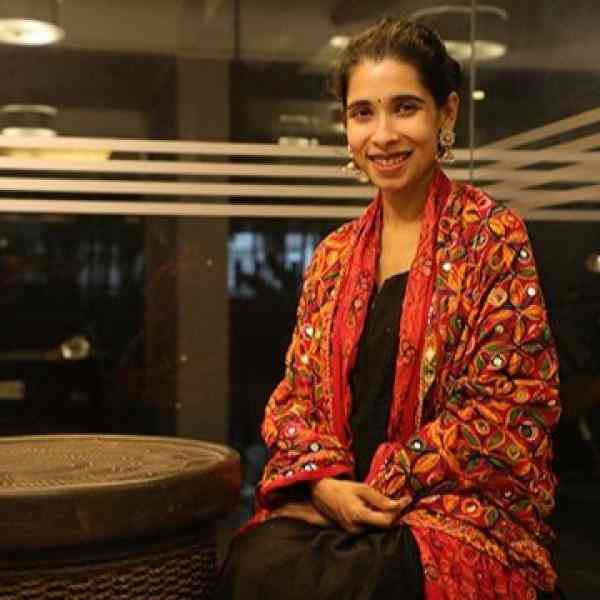
Alina Alam is transforming how India sees people with disabilities and special needs by creating hotspots of inclusion - cafés located in some of the country’s most visible and high-traffic spaces, entirely managed and operated by persons with disabilities. Her new idea is: inclusion becomes real only when society encounters it daily, in everyday, public - facing environments where persons with disabilities confidently work, manage, and lead. This model transforms public perception and helps different stakeholders such as government, corporate, and the public to become active partners in changing societal norms, making inclusion scalable, economically viable, and a way of life.
The New Idea
Alina Alam is changing the system that excludes persons with disabilities by shifting inclusion from policy intent to everyday public experience. Through Mitti Café’s, she transforms mainstream commercial and high-importance spaces into hotspots of inclusion, where persons with disabilities lead and manage enterprises in high-visibility environments.
Her insight is that perception is the primary barrier to inclusion, and that it cannot be changed through policy or training alone. She believes perception over a period of time becomes society’s reality. It must be experienced repeatedly in familiar, trusted settings. By creating these hotspots of “enterprise demonstration” in iconic, high footfall institutions such as the Supreme Court, Rashtrapati Bhavan (President of India Residence), and international airports, she is creating a new perception about the enterprise and abilities of people with disabilities in the daily lives of citizens. Mitti Café has become a visible, framechange hotspot that persons with disabilities can lead and work anywhere, transforming each interaction into a powerful public education moment that redefines disability as strength, skill, and dignity rather than sympathy.
Each Miti Cafe becomes a live demonstration that challenges assumptions about capability, professionalism, and leadership. These repeated interactions shift citizen, institutional, and market behavior, making the new reality both expected and demanded.
Her model scales through a standardized, partnership-driven approach that enables institutions to open Mitti Cafes as hotspots of inclusion with minimal space and investment. As more institutions adopt the model, perception and belief in the ability of people with disabilities moves from exception to norm, creating a self-reinforcing cycle where visibility drives framechange, acceptance, and acceptance drives replication.
The Problem
In India, persons with different kinds of disabilities constitute an estimated 8 to 9 percent of the population, amounting to nearly 90 million people, yet remain among the most excluded groups in society. Their exclusion is driven less by their impairments and more by entrenched societal perceptions that define them as dependent or limited rather than capable.
These perceptions translate into systemic barriers across education, employment, and public life. Labour force participation among persons with disabilities remains extremely low, and a significant proportion are either unemployed or confined to informal, low paying roles. For many, especially those with intellectual, developmental, or invisible disabilities, opportunities are almost nonexistent due to stigma and lack of exposure.
Despite progressive frameworks such as the Rights of Persons with Disabilities Act and the National Policy for Persons with Disabilities (2006) sought to advance welfare and empowerment, weak implementation, limited accountability, and the absence of meaningful representation of persons with disabilities in governance and decision - making have severely limited their impact. The focus of these policies remains largely administrative and compliance - driven, with little emphasis on proactive inclusion or fostering everyday participation. As a result, the promise of equality under law has not translated into equality in lived experience - leaving dignity, livelihood, and self-reliance elusive for most persons with disabilities and inclusion remains largely compliance driven. Weak implementation, limited accountability, and the absence of representation in decision making prevent these policies from translating into meaningful participation. As a result, the promise of equality under law does not translate into equality in lived experience.
Most interventions focus on skilling individuals without shifting perception at large and addressing the environments they enter. This creates a persistent mismatch where trained individuals continue to face exclusion. Efforts remain fragmented, small scale, and dependent on subsidies or charity, failing to generate sustained demand for inclusion.
At its core, the system reinforces invisibility. Without consistent, positive exposure to persons with disabilities as professionals and leaders, societal expectations remain unchanged, and exclusion continues across generations.
The Strategy
Alina’s strategy is to redesign how society encounters disability by embedding persons with disabilities and special needs into high-trust, high-visibility economic roles through hotspots of running enterprise. Mitti Café operates at the intersection of public interaction, employment, and institutional partnership, making inclusion visible, credible, and scalable.
Mitti Cafés have built a standardized blueprint that allows any organization with just 80 square feet of space to host a café and become part of their movement. Partnerships with major corporations like Infosys, Wipro, and Adani, as well as government institutions such as the Supreme Court and airports, have amplified its reach and legitimacy. Each new café acts as a demonstration hub - a “proof point” that inclusion is both feasible and beneficial leading to perception shift and encouraging other organizations to replicate the model. By strategically choosing locations that are public, prestigious, and people - dense, Alina ensures that every café serves as a place of changing society’s frame on what people with disabilities can do and lead.
Beyond employment, Mitti Café’s deeper impact lies in shifting social perception. With over 2 crore meals served, every customer interaction becomes a moment of mindset change and a reminder that people with disabilities are not recipients of care, but capable professionals contributing to society. In these cafés, leadership by the disabled becomes an everyday experience that is lived, witnessed, and normalized. Through each handshake, cup of tea, and shared smile, Mitti Café is building a national movement that replaces sympathy with respect and invisibility with pride proving that when inclusion is visible, it becomes inevitable.
While building her model, Alina intentionally chooses to partner with influential institutions such as courts, government offices, airports, and large corporations, which host these cafes within their premises. This shifts institutions from passive supporters of inclusion to active participants in demonstrating a model that is completely run by people with disabilities. The model is designed for rapid replication. Standardized café units can be set up quickly, operate at low cost, and achieve financial sustainability within a short period. This positions these cafes not just as hotspots of inclusion but also as economically viable rather than charity-dependent.
Alina envisions a world where full independence and leadership of disabled people are part of everyday life. In 2017, in her early twenties, Alina founded Mitti Café with zero startup capital. Supported by the Deshpande Foundation, she began operations from a small tin shed, using borrowed utensils and donated equipment. What began under an umbrella soon became a movement. She discovered that when people understood the intent behind the enterprise, they responded not with charity but with curiosity and admiration. Every interaction between the public and a Mitti Café employee challenged stereotypes and rewrote narratives turning each meal served into an act of awareness. Mitti Café is now the world’s largest chain of cafés run and managed entirely by people with disabilities.
The strength of Alina’s strategy lies in its lean, low - cost, and partnership - driven design. Mitti Cafés are hosted in rent - free or subsidized spaces in airports, universities, corporate campuses, hospitals, and government buildings. Each café is a compact 80 - square - foot unit that can be installed within 80 hours, with most reaching break-even within the first month and achieving full financial self-sufficiency in a year. By standardizing operations and securing upfront partnerships with corporate and government institutions, Alina created a model that is both replicable and self - sustaining. What began as a single café in a tin shed has now grown into one of the world’s largest chains of cafés run by persons with disabilities.
As of 2025, Mitti Café operates across 64 locations in India, including high - visibility spaces such as the Supreme Court, Rashtrapati Bhavan (President of India House), and major international airports. The Chief Justice of India, moved by his interaction with the café’s team at the Supreme Court, invited the President to witness the model firsthand in 2023. So inspired was the President that she invited Mitti Café to establish a café within Rashtrapati Bhavan itself - a poetic symbol of India’s first citizen embracing those historically marginalized.
Mitti Café’s “Good Gifts” initiative reimagines gifting as a meaningful act of inclusion and social impact. Through thoughtfully curated products and gift hampers prepared with the involvement of persons with disabilities, the initiative enables individuals and corporates to celebrate occasions while directly supporting dignified livelihoods and inclusive employment. Beyond fundraising, Good Gifts also serves as a powerful outreach strategy — carrying Mitti Café’s message of dignity, inclusion, and changemaking directly into homes, offices, and communities. While the cafés themselves create spaces that draw people in to experience inclusion firsthand, Good Gifts works in the opposite direction: taking the message outward into everyday celebrations and relationships, helping the idea of inclusion travel far beyond the café walls. Complementing this, Mitti Café’s “Sensitisation Drive” focuses on building greater awareness and empathy around disability inclusion by creating opportunities for meaningful interaction between the public and persons with disabilities. Through workshops, engagements, and everyday workplace integration, the initiative helps challenge stereotypes, foster understanding, and encourage institutions and communities to embrace inclusion as a shared social responsibility.
Mitti Café’s model achieves a rare convergence of social and financial sustainability. Even small donations, such as INR 50 lakhs (USD 56 000), are transformed into over INR 1 crore (USD 111 000) in revenue within three months, all of which directly sustain employment for persons with disabilities. As more organizations witnessed this success, demand grew for Alina’s corporate sensitization programs and workplace inclusion training. Mitti Cafés gave living demonstrations of inclusion - in - action, inspiring companies to replicate inclusive hiring practices within their own systems.
As of 2025, Mitti Café has trained over 6,500 individuals to work at places similar to them, employed more than 600 persons with disabilities (45% women, 86% first - time earners), and served over 22 million meals - each one a moment of awareness and connection. Its initiatives have reached 49 cities across India and 8 countries globally (Mitti Good Gifts), embedding disability inclusion into the mainstream workforce and public consciousness.
For Mitti, the impact extends beyond numbers - it lies in transformation. Bhairappa, once rejected from over 80 jobs due to his dwarfism, now leads one of Mitti’s busiest cafés. Similarly, Keerthi, who once crawled into the café interview for lack of a wheelchair, now manages an airport café with confidence and independence. A single mother with hearing impairment who once faced abandonment now runs her household and educates her children. These are not isolated stories - they are everyday realities of a new system Alina has created and shifting societal perception.
Looking ahead, Alina is immediately scaling Mitti Café to over 250 cafés and 3,000 employees, with a targeted expansion into hospitals, universities, and defense institutions. Her larger focus is to bring frame change in every institution around the ability of people with special needs. She is building specialized livelihood and skilling centers for the Indian Army and Air Force to normalize inclusion for those disabled in service and for children with disabilities in defense families. Her future strategy also includes international expansion starting with airport presence in Sri Lanka, the establishment of regional skilling hubs, the integration of assistive technology and digital learning, and strengthened advocacy to influence policy and large - scale corporate inclusion practices. Her mission is to make everyday inclusion a lived reality for all, ensuring that dignity and opportunity become the new norm, not the exception.
The Person
Alina Alam is building the world's largest chain of cafés run entirely by persons with disabilities. She started Mitti Café at the age of 22 with no capital, infrastructure, or institutional backing—only a deep conviction that dignity is a right, not a privilege. What began as a small table under an umbrella with borrowed utensils has since grown into a nationally recognized movement for inclusion, livelihood, and mindset transformation.
Raised by her grandmother, a woman with a severe disability who nonetheless held the household together with extraordinary strength and competence, Alina developed an early understanding of the gap between society’s perception of disability and lived reality. While the world often viewed disability through the lens of sympathy and dependence, she witnessed resilience, capability, and leadership firsthand. This experience shaped her belief that exclusion is not rooted in inability, but in societal perception—and that true inclusion must be experienced in everyday life.
During her master’s studies at Azim Premji University, this awareness crystallized into action. Deeply moved by questions of social injustice, Alina chose to step away from conventional career pathways and dedicate herself to building a model that could challenge exclusion at its roots. Rather than creating isolated interventions, she envisioned inclusive spaces embedded within mainstream public life—spaces where persons with disabilities would lead with confidence and excellence, transforming perceptions through everyday human interaction.
Before founding MITTI Café, Alina worked across multiple dimensions of the citizen sector, including consulting with the Government of Andhra Pradesh’s Planning Department and founding youth-led community initiatives such as the Students’ Social Service Reform Initiative (SSRI) in Mumbai and PAHAL in Bengaluru. She also engaged with issues ranging from anti-trafficking and rural development to child cancer care, women’s empowerment, and legislative research.
Her work has received recognition from India’s highest offices, including the President of India, the Prime Minister, the Chief Justice of India, and several Chief Ministers, as well as international dignitaries such as German Chancellor Olaf Scholz. Alina herself has been honored with numerous national and global recognitions, including Forbes 30 Under 30 Asia, the NITI Aayog Women Transforming India Award, the UN Intercultural Innovation Award, the Commonwealth Youth Award, and CNBC Social Entrepreneur of the Year.
What distinguishes Alina is her rare combination of empathy, strategic clarity, and execution discipline. She is not only creating dignified livelihood opportunities for persons with disabilities but also fundamentally reshaping how society understands ability, contribution, and participation. Her vision is of a future where persons with disabilities are visible across every sphere of public life—as leaders, entrepreneurs, professionals, and changemakers—and where inclusion is no longer exceptional, but simply part of everyday reality.