 Ashoka
Mount Vernon Presbyterian School
At Mount Vernon Presbyterian (MVP), design thinking is infused across the curriculum and culture of the school as a means of cultivating a Changemaking attitude in students. The design-thinking program is rooted in empathy, and because of this, students are able to relate what they learn in school to wider community issues. MVP is devoted to spreading their ideas—they developed an Institute for Innovation, which takes successful experiments and approaches that teachers have created in classrooms and conducts research to build best practices. MVP continues to nurture future leaders and their design-learning framework has become a beacon of success for other schools across the country.
Bo Adams
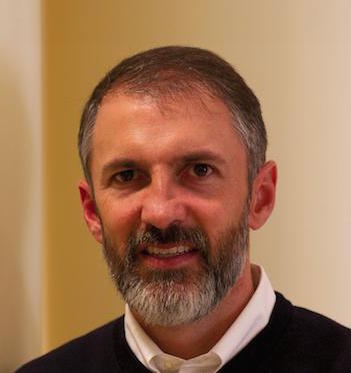
Bo Adams is a visionary and influential education leader in the Atlanta area and in the private school space. When I asked him for a Changemaker moment, he told me that his turning point was in 1999. He had been working in Westminster, one of the most elite private schools in Atlanta, when he enrolled in a graduate program at Emory University. His mentor there was Frank Baharas, who worked with Albert Bandura in self-efficacy theory. Bo started constructing theories and practices around student self-efficacy for being an agent of change. Even though he finished the degree, he worked with Baharas twice a week for the next 8 years. When Bo became the middle school principal at Westminster, he started to question many of the frameworks around schooling. If school is preparing students for real life, why doesn’t it look like real life? He started reconstructing Westminster’s middle school on these principles – he structured the school so that each faculty member teaches four slightly larger classes instead of five smaller ones, and used the extra time to put the faculty in a class with each other. He also developed something that he calls Father-Son-based learning (#fsbl), as he was further refining his educational philosophy around citizenship. Father-son based learning is time that Bo spends with his two young sons in which his sons make all of the decisions and Bo is simply there for prompting or assistance if needed. For example, the first time he tried this, he brought his older son to a MARTA (Atlanta metro rail system) stop. They spent 4.5 hours at the stop trying to figure out how to go somewhere, but Bo let his sons figure it out, talk to people there, etc. Every five minutes he would prompt his sons for them to stop and take a picture or note something that intrigues them. Bo adapted his experimental approach of father-son based learning into a course at Westminster called Synergy. Students work on a problem and journal, observe, listen, and try to make sense of that problem in the real world. For example, he had four students working on English Avenue in Atlanta (low-income neighborhood), which is a food desert. They thought they should create an urban garden, but they learned that they cannot have a solution and go looking for a problem. They realized when interviewing residents that they did not need a garden (there were many already), they needed jobs. Therefore, the students collaborated with a local organization to host a job fair and no one came, a failure that led to more learning experiences and a deeper understanding of the community and that particular problem. Bo left to be a consultant on designing learning experiences like this, but he missed being in school too much. Mount Vernon Presbyterian was on his list for most inspiring schools and they have given him the freedom to be an innovator (Bo is the Chief Learning and Innovation Officer).