 Ashoka
Learnings from Impact Leaders: Voices of Belonging
We recently hosted the second episode of our webinar series, “Learnings from Impact Leaders”, as part of the Dela programme. This series creates a brave space for IKEA co-workers and Ashoka Fellows to reflect on unconscious biases, grounded in real experiences from their journey through Dela.
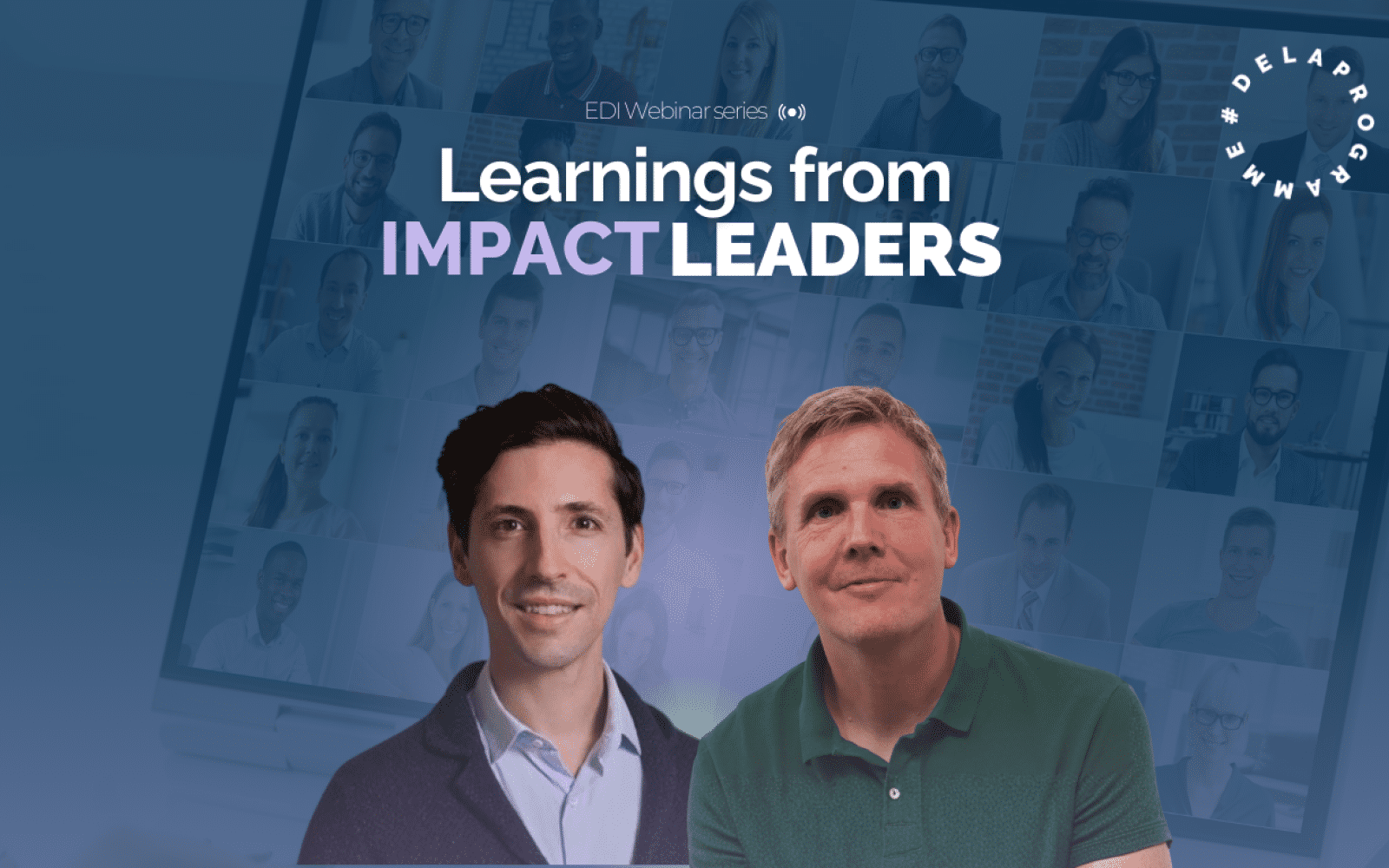
This session, “Voices of Belonging,” brought together Hugo Menino, Ashoka Fellow and co-founder of SPEAK, and Magnus Stahl, Product Engineering Manager at IKEA Sweden. The conversation explored what it really takes to collaborate across contexts and how belonging is built when relationships come first.
Building belonging through trust and time
“Joining the Dela accelerator programme, Hugo said, came at a turning point”. SPEAK had validated a promising direction: supporting organizations on their diversity and inclusion journeys. But there came a moment when it felt stuck at a wall: they needed the right conditions to accelerate and properly test what scaling could look like. What made the difference, he explained, wasn’t just access to expertise through Dela. It was commitment: not just “a few hours here, a few hours there”, but a level of stakeholders' involvement that made it possible to truly move the work forward, and to pivot when needed.
For Magnus, saying yes was both personal and professional. After years living in Asia and working closely with migrant workers, he returned to Sweden feeling he missed “that part of doing good.” When he learned about the Dela programme, he applied to reconnect with that sense of purpose, while also challenging himself professionally.
He was candid about entering with gaps: he wanted to understand social entrepreneurship more deeply, and he knew he had “no knowledge at all in this field.” That honesty set the tone for one of the session’s core themes: unlearning requires humility... and time.
A striking moment came when Hugo named a bias he had developed from past partnerships that didn’t work. In Hugo’s words, bringing in top talent doesn’t automatically create impact if the structure doesn’t allow relationships, context, and trust to form first.
That reflection reframed the “slow start” both speakers described, not as inefficiency, but as an essential phase of building the foundation for real collaboration.
Unconscious bias isn’t only about “difference”
Magnus spoke openly about his own internal process. His challenges weren’t just project-related; they were personal. Re-examining his assumptions about what diversity and inclusion “means”; learning Hugo’s perspective and staying open even when it felt overwhelming; trying to contribute from a comfortable meeting room while others navigated uncertainty and risk.
At one point, he shared how he had to shift the way he listens, letting go of what he “already knew” and listening differently. When asked what stayed with him beyond the Dela systems change programme, Magnus highlighted two shifts.
- On one hand, leading through change with less control. He realised he doesn’t need to know everything to move forward; what matters is staying oriented toward the “why” and continuing to progress.
- And, on the other hand, practicing non-judgment daily. Letting go of constant opinion-making helped him “relax”, focus on what matters, and show up more constructively.
In one of the most honest reflections of the session, Magnus described a preconception he noticed in himself: that social entrepreneurs are passionate but unstructured, driven but “messy.” What surprised him after working with social entrepreneurs was the opposite.
Working closely with Hugo and the team, he experienced a level of competence, team-building, and decision-making under pressure that he described as “breathtaking.” It was a reminder that unconscious biases can hide in seemingly positive stereotypes, and that direct collaboration is one of the fastest ways to dismantle them.
Belonging starts before the work gets done
If there was one thread running through everything, it was this: relationships aren’t the soft part of the work... they are the work.
Hugo summarized it simply, echoing the heart of SPEAK’s approach: If we focus first on building relationships grounded in trust, loyalty, and friendship, then “magic happens.”
Are you an IKEA co-worker?
Sign up for the third session of the “Learnings from Impact Leaders” webinar series, taking place on World Day of Social Justice, February 20th, 2026, under the global theme “Empowering Inclusion: Bridging Gaps for Social Justice.” This conversation will connect the theme directly to the realities of work and inclusion within global retail and supply chains.
During the session, participants will hear from and engage with Ashoka Fellow B. S. Nagesh, founder of the Trust for Retailers and Retail Associates of India (TRRAIN), an organization dedicated to creating employment opportunities for persons with disabilities in India’s retail sector and advancing inclusive livelihoods. Nagesh will be joined by Sajja Sridhar, Global Supply Chain Manager at IKEA, who has supported this journey through the Dela programme. Together, they will share practical insights on how inclusion can be strengthened across industries and geographies.