 Ashoka
ASN Spotlight
Tristan Lecompte
ASN member since 2025
France
From Fair Trade to Ocean Plastic: Tristan Lecomte’s Journey of Serendipity and Social Impact
Elected an Ashoka Fellow in 2009, Tristan has since joined the Ashoka Support Network (ASN) to give back to the community that recognized his work. “Ashoka was never about financial support for me,” he explains. “It was recognition—a global label that validated my journey. Now I want to extend that recognition to others.” In this material led by ASN Global Communication Manager Yuliya Koroleva, Tristan reflects on nearly three decades as a social entrepreneur, one-word surfaces again and again: serendipity. From a student NGO in Nepal to pioneering fair trade in France, to agroforestry and ocean plastic recycling, his path has been shaped by chance encounters, intuitive leaps, and a deep desire to be useful to others.
Serendipity as Compass
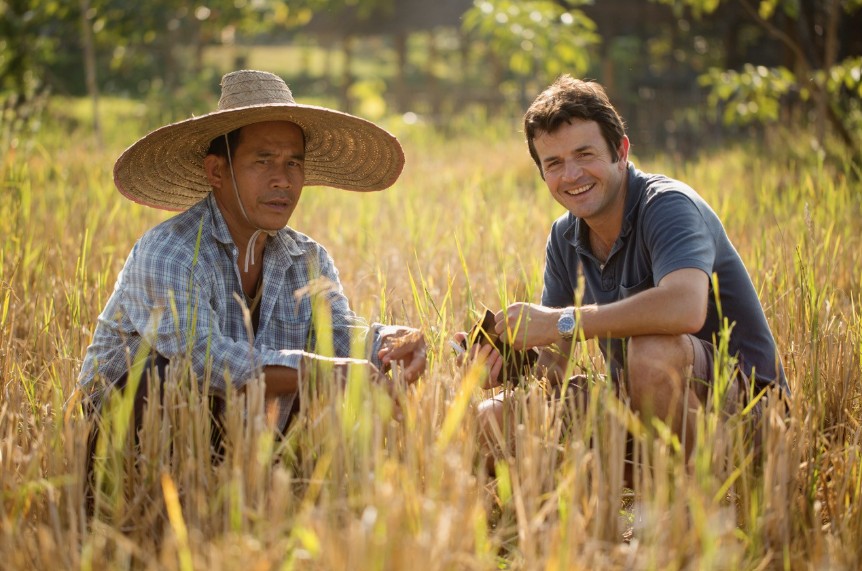
Each of Tristan’s ventures emerged from unexpected opportunities. Planting trees with cocoa suppliers led to PUR, a regenerative agroforestry company, pioneering carbon offsetting.
A client’s question about ocean plastic sparked Second Life, ocean plastic recycling enterprise, supporting local collectors in recycling.
“Serendipity is about listening to signs,” he says. “You have to be intuitive, receptive. Suddenly everyone talks to you about trees, or plastic, or something you feel drawn to. That’s how you find your destiny.”

Lessons from the Field
Working with small-scale farmers across 80 countries has been Tristan’s greatest source of inspiration. “They are poor, disadvantaged, hit by climate change and unfair trade rules—yet they remain hopeful. That gap between hardship and hope has always motivated me.” He emphasizes that true success lies not in external achievements but in persistence. “Success doesn’t exist as a final state. It’s just solving the next problem.
As long as you fight, you’re successful.” His involvement in impact funds like 50 Partners Impact has shown him the value of larger, more animated communities. “Entrepreneurs don’t need constant coaching. They need light-touch support—connections, a few calls, encouragement. That’s enough.”