 Ashoka
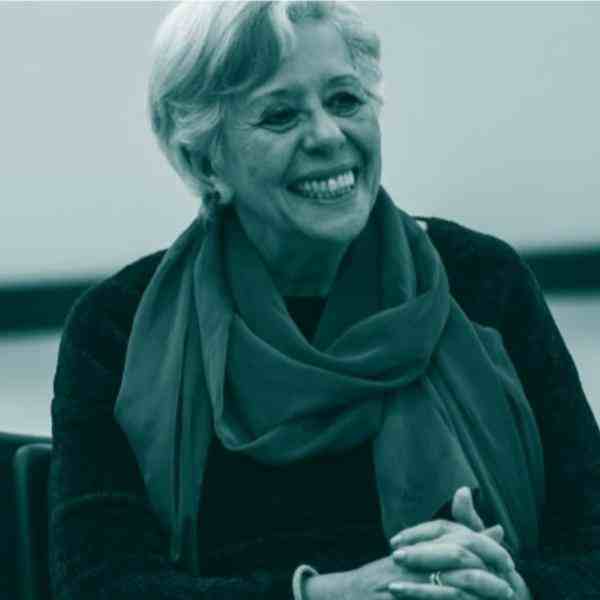
Marta Esteves de Almeida Gil
Amankay Instituto de Estudos e PesquisasAmankay Instituto de Estudos e Pesquisas
https://www.amankay.org.br/home/index.phpIntroduction
Marta is setting up an information system for the physically, mentally and sensorially disabled. The system will collect, produce, and disseminate important information for this currently neglected sector of the population, and with this service, Marta expects to influence public policy, thus improving the quality of life and citizenship of disabled populations.
The New Idea
Marta plans to create an information system that will provide the disabled with both needed services and hard-to-access specialized information. It will also help Brazil develop the knowledge necessary to understand the extent and nature of the handicaps afflicting so many of its citizens -- knowledge important both to form sensible policies and, hopefully, to challenge long-standing attitudes towards the handicapped.
The Documentation and Information System on Handicaps (SDID) plans to circulate information about schools for the handicapped, specialized institutions and publications, legal matters, professional training, work and leisure opportunities, and medical diagnosis and care. Marta plans to make use of all possible sources of information, including the press, universities, technological institutions, and individuals. If a blind person in Sao Paulo wants swimming lessons, he or she (or a social worker) could seek such opportunities out in a flash. Or they could find out about a factory under construction in the state of Minas Gerais which integrates handicapped workers at all stages of production. They might also be able to access step-by-step therapy or exercise instructions.
Although Marta will focus initially on a few of the most urgently and broadly needed areas, she ultimately hopes to gather and make available as much relevant information as possible. In addition to being a valuable service for the disabled, drawing all the many disparate providers and users together in one network will probably encourage a good many collaborations that might not otherwise occur. It will also bring about a greater level of organization among these long-ignored people.
The Problem
Widespread undernourishment, record-high accident rates, and inadequate pre-natal assistance contribute to the growth of the Brazilian handicapped population, which is presently estimated at 14 million. This number, however, is a rough estimate: the last official census on any given handicap was carried out in 1949. Only two other governmental surveys on the handicapped -- both of limited scope -- have been carried out: one surveyed the characteristics of handicapped individuals who had been hospitalized in the state of Sao Paulo, and the other, carried out in metropolitan areas around the country, surveyed the characteristics of those totally handicapped by one of only four deficiencies (visual, audio, physical and mental).
According to Marta, this lack of interest is due in part to the "cultural values (of a modern society) which emphasize efficiency and physical beauty." These values not only leave the handicapped population stranded, unable to exercise full citizenship and enjoy specific social rights, but they permit society at large to ignore the responsibility it has to its complex totality.
The Strategy
The idea is to begin with one nucleus of information in Sao Paulo, from whence will develop other centers in neighboring states until there is a national de-centralized network. In this network each component will act independently of the others while maintaining its link with the whole system. Marta believes that this type of organic growth insures that each component will maintain an identification with the environment it services. Such a multi-centered system could also adjust easily if support for any one center should wane.
In developing the system, Marta will invest a good deal of her early effort engaging existing service and user groups. But she'll also design the system to serve the public at large.
The Person
Marta, whose father has a physical handicap, grew up observing him living a normal life, both at home and at work. "I rarely felt his limitation, and learned to consider his handicap something natural." A sociologist by training, Marta's later involvement as a volunteer with a survey on the blind and visually impaired set her on a professional path with the handicapped.
Later, in 1988, while working with a communication network in Sao Paulo that sought to investigate and disseminate solutions for all types of problems encountered by communities and individuals, Marta realized the importance of information processing and added this dimension to her work with the handicapped.
Fellows working in the same sector


Do you want to support this entrepreneur and others around the world?
Ashoka Fellows are the world’s leading social entrepreneurs. They champion innovative new ideas that transform society’s systems, providing benefits for everyone and improving the lives of millions of people. Ashoka Fellows define the new roadmaps that allow people to thrive in this new environment, while providing solutions and demonstrating the how-tos. They are the ultimate role models in today’s world